

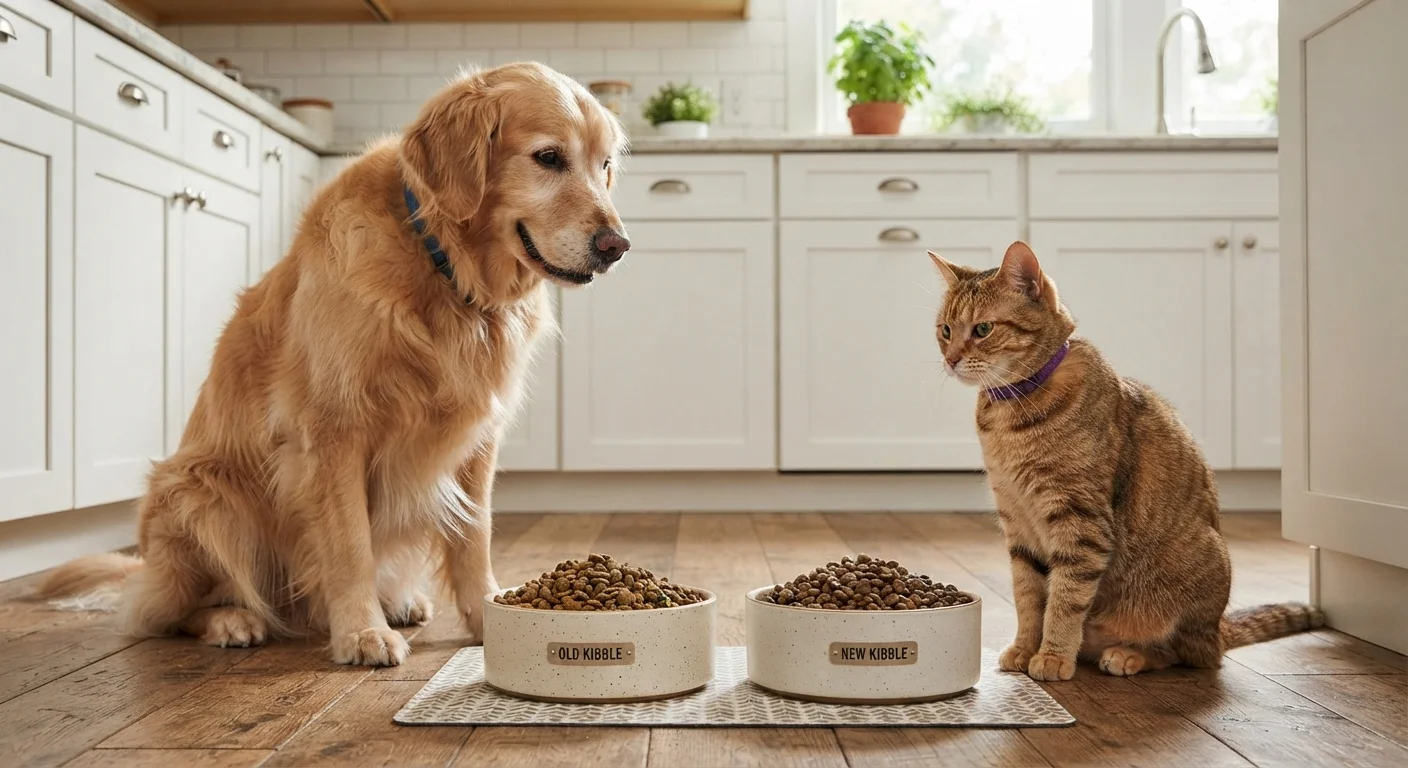
Key Takeaways
- Switching pet food too quickly is a leading cause of vomiting, diarrhea, and food refusal.
- A 7-10 day gradual transition reduces digestive upset in most healthy dogs and cats.
- Pets with sensitive stomachs, chronic illness, or age-related needs may require a slower transition.
- Monitor stool consistency, appetite, and energy throughout the switch to catch problems early.
- Always consult your veterinarian before changing the diet of a pet with a health condition.
What you will need
Why Abrupt Food Changes Cause Digestive Problems
A pet's gastrointestinal tract hosts a complex community of bacteria, enzymes, and microbial populations precisely tuned to the food they currently eat. When a new food is introduced overnight, that microbial balance is disrupted faster than it can adapt - resulting in loose stools, gas, vomiting, or outright food refusal. This is not a sign that the new food is inferior; it is simply the gut's normal response to sudden change.
Puppies, kittens, senior animals, and pets with a history of digestive sensitivity are especially vulnerable. For context on how nutritional needs shift as pets age, see our overview of senior pets and shifting health needs. Understanding the mechanism helps you follow the transition steps with confidence rather than guesswork.
Slower Is Nearly Always Better
When in doubt, extend the transition timeline rather than compress it. A 14-day or even 21-day transition is perfectly appropriate for older pets, animals with known digestive sensitivities, or any pet switching between very different food types (such as dry to wet, or standard to prescription diet). Patience at this stage prevents setbacks that could set the process back by weeks.
What You'll Need Before You Start
Gather the essentials before beginning the transition so you can stay consistent throughout the process.
What you will need
If you are also considering making your pet's food at home, be aware that homemade diets carry distinct nutritional risks - our guide on homemade pet food: what goes right, what goes wrong covers the key advantages and pitfalls honestly.
Step-by-Step Transition Plan
Follow these steps over 7-10 days for a healthy adult pet. Extend the timeline to 14 days or more if your pet has a sensitive stomach or a diagnosed digestive condition. Pairing this process with a consistent feeding schedule supports gut stability - feeding schedules and portion control explains how to build that routine.
Days 1-2: 75% Old Food, 25% New Food
Mix three parts of your pet's current food with one part of the new food. Serve at your pet's normal meal times and in their normal portion size. This small introduction gives the gut's microbial population its first exposure without overwhelming it.
Days 3-4: 50% Old Food, 50% New Food
Move to an equal blend. Check your pet's stools each day - they should remain formed and consistent. If stools become noticeably loose, hold this ratio for an extra day or two before moving forward rather than reverting entirely.
Days 5-6: 25% Old Food, 75% New Food
Reduce the original food to one quarter of the bowl. Your pet's appetite and stool quality at this stage are good indicators of how well the transition is progressing. Continue monitoring energy levels and willingness to eat.
Days 7-10: 100% New Food
Serve the new food exclusively. Most healthy pets tolerate this final stage without issue if the earlier steps were followed. Continue observing stool consistency for a further three to five days to confirm the digestive system has fully adjusted.
Recognizing Problems and Knowing When to Stop
Mild, brief loose stools on days two or three are common and usually self-resolve. However, certain signs indicate the transition should pause or that veterinary input is needed:
- Vomiting more than once in a 24-hour period
- Diarrhea lasting more than two days, or diarrhea with blood or mucus
- Complete appetite loss persisting beyond one day
- Lethargy, bloating, or visible discomfort after meals
If any of these occur, return to 100% of the original food and contact your veterinarian before attempting the transition again. For a broader check on whether your pet's overall diet is meeting their needs, our practical feeding audit provides a useful structured checklist.
Special Circumstances Require Veterinary Guidance
Pets switching to a prescription or therapeutic diet - such as those formulated for kidney disease, food allergies, or pancreatitis - should follow a transition plan developed with their veterinarian. The standard 7-10 day schedule may not apply, and some therapeutic foods have specific feeding instructions that override general guidance. Do not attempt a self-directed transition for a medically complex pet.
This article provides general educational information about pet nutrition and is not a substitute for personalized veterinary advice. Always consult a licensed veterinarian before making significant changes to your pet's diet, particularly if your pet has an existing health condition.