
Things That Go Wrong With DIY Plumbing Repairs (and Why Pipes Don't Forgive Guesswork)

Key Takeaways
- Plumbing errors often stay hidden for days or weeks before triggering serious water damage.
- Mismatched materials, improper thread sealing, and skipped shutoffs are among the most common DIY mistakes.
- Some plumbing work requires permits or licensed professionals - skipping this step can affect your homeowner's insurance.
- Knowing where your main shutoff valve is located can prevent a minor repair from becoming a flood.
- When in doubt, stopping and consulting a licensed plumber is nearly always less expensive than fixing water damage.
Why Plumbing Is Harder Than It Looks
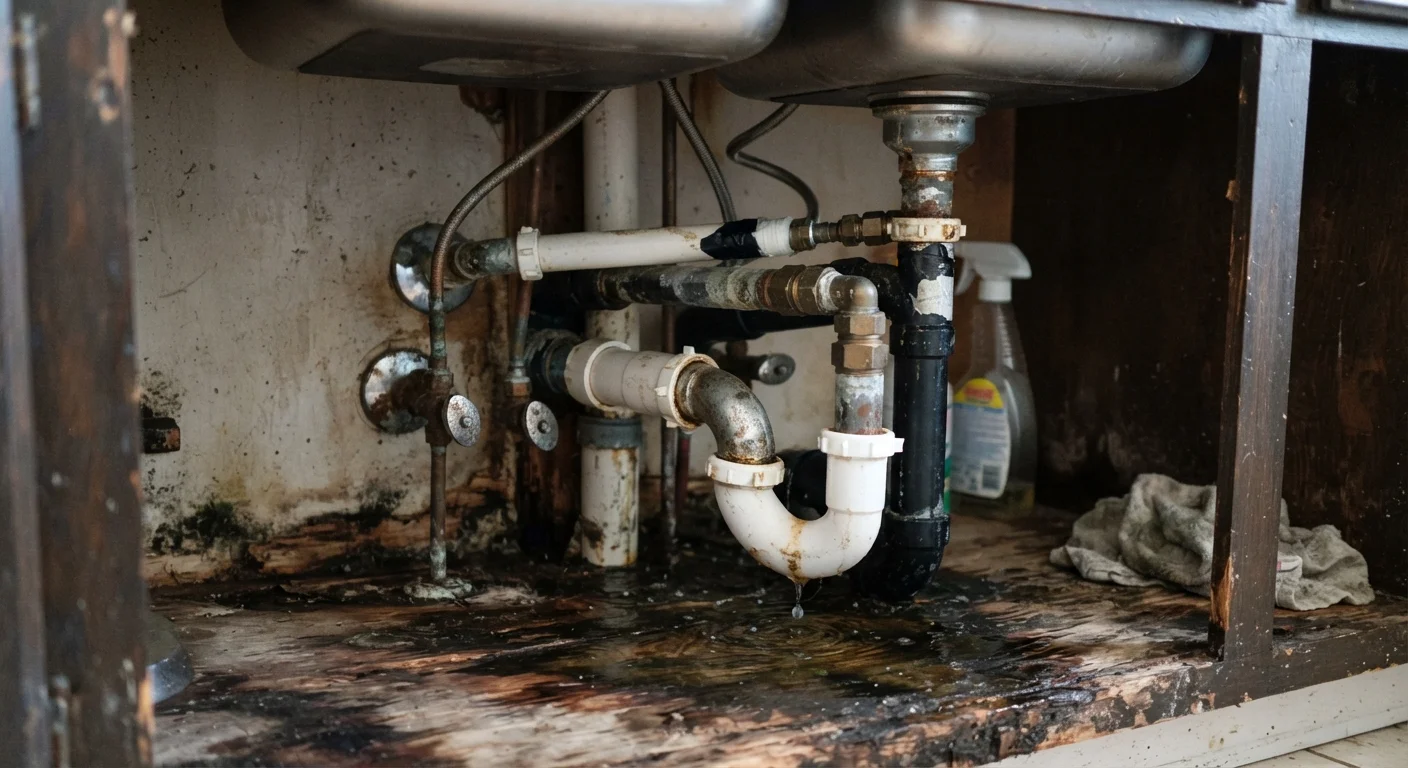
Plumbing repairs have a deceptive quality: the easy part - stopping a drip or swapping a fixture - often goes smoothly. The problem arrives later, silently, inside a wall cavity or under a cabinet. Water is patient. A joint that holds for three days under light pressure may fail on day four when someone runs a full bath. By then, the damage is done.
That delayed consequence is what separates plumbing from many other DIY tasks. A poorly hung shelf falls immediately. A slow pipe leak can saturate subfloor material, feed mold growth, and compromise structural framing before anyone notices a stain on the ceiling below. Understanding where DIYers most commonly go wrong - and why - is the first step toward repairs that actually hold.
For a broader view of which bathroom tasks are genuinely homeowner-friendly versus which legally or practically require professional involvement, see our guide on planning a bathroom refresh.
The Most Common DIY Plumbing Mistakes
The mistakes below follow a recognizable pattern: each one stems from either incomplete knowledge, the wrong materials, or skipping a step that feels unnecessary until it isn't.
Using the wrong pipe material or mismatching metals at joints.
Why it happens: Hardware stores stock several pipe types - copper, CPVC, PEX, galvanized steel - and beginners often grab whatever looks like it fits. Connecting dissimilar metals without a dielectric union causes galvanic corrosion, which eats through the joint over time.
Applying thread sealant tape incorrectly or skipping it entirely.
Why it happens: Threaded fittings look secure when hand-tightened, so sealant tape (often called plumber's tape or PTFE tape) feels optional. It isn't - and applying it in the wrong direction causes it to unwind as the fitting is tightened, providing no seal at all.
Over-tightening fittings, especially on plastic or ceramic components.
Why it happens: The instinct when dealing with a potential leak is to tighten further. On plastic fittings, compression nuts, and supply line connections to ceramic fixture inlets, over-tightening cracks the material - often not immediately, but within days.
Skipping or incorrectly installing the P-trap under a sink.
Why it happens: P-traps look like simple curved pipes, but their exact configuration - water seal depth, alignment with the drain line, proper slope - matters. Homeowners sometimes install them in reverse, create air gaps that let the trap dry out, or use extensions that result in a trap too far from the drain outlet.
Failing to account for drain slope on horizontal runs.
Why it happens: It seems logical that a drain pipe just needs to go downhill - but too steep a slope is as problematic as too flat. A steep angle lets water race ahead of solids, leaving debris behind to build up.
Always Locate Your Main Shutoff First
Before touching any supply line - even a simple shutoff valve replacement - know exactly where your home's main water shutoff is and confirm it works. A stuck or corroded main shutoff during an active leak can turn a manageable repair into a flooding event. Test the valve by turning it fully off and on before you begin any repair work.
The Permit and Code Side of Plumbing Work
Many homeowners are surprised to learn that certain plumbing tasks - moving drain lines, adding fixtures, or altering supply lines beyond simple repairs - may require a permit and inspection in most US jurisdictions. Working without one isn't just a bureaucratic risk. If unpermitted work later causes water damage, a homeowner's insurance claim can be denied on those grounds.
Permits exist because inspectors verify that work meets local building codes, which address slope on drain lines, correct venting to prevent sewer gas buildup, and appropriate pipe materials for each application. These aren't arbitrary rules - they reflect decades of lessons about what fails and why.
Our article on when home improvement projects require official approval covers the permit landscape in detail. The core advice: check with your local building department before starting any work that goes beyond like-for-like fixture replacement.
Unpermitted Work Can Void Insurance Coverage
If plumbing work that required a permit was performed without one and subsequently causes water damage, many homeowner's insurance policies will not cover the resulting claim. Before starting any project beyond straightforward fixture swaps, contact your local building department to confirm whether a permit is required. This single step protects both your home and your coverage.
Knowing When to Stop and Call a Professional
A useful rule of thumb: if opening up a repair reveals something unexpected - corroded pipe material you don't recognize, a fitting that doesn't match anything at the hardware store, or evidence of prior water damage - stop. Improvising around an unknown is where small repairs become expensive ones.
Licensed plumbers carry liability insurance and are bonded, which matters if something goes wrong after the work is done. They also know which local code requirements apply, what materials are approved for your water chemistry, and how to spot problems that aren't obvious to the untrained eye. The cost of a professional consultation is nearly always less than the cost of remediating water-damaged framing or drywall.
If you're evaluating where DIY has sensible limits across home systems more broadly, our piece on DIY electrical work myths covers a parallel set of risks worth understanding. And if you've had to cut into drywall to access a pipe, drywall patching for beginners walks through the repair process once the plumbing is sorted.
This article is for general informational purposes only. Plumbing codes and permit requirements vary by location. Always consult a licensed plumber and your local building authority before undertaking plumbing work beyond simple fixture maintenance.