
Interior Paint Finishes Explained: Matte, Eggshell, Satin, Semi-Gloss, and Gloss

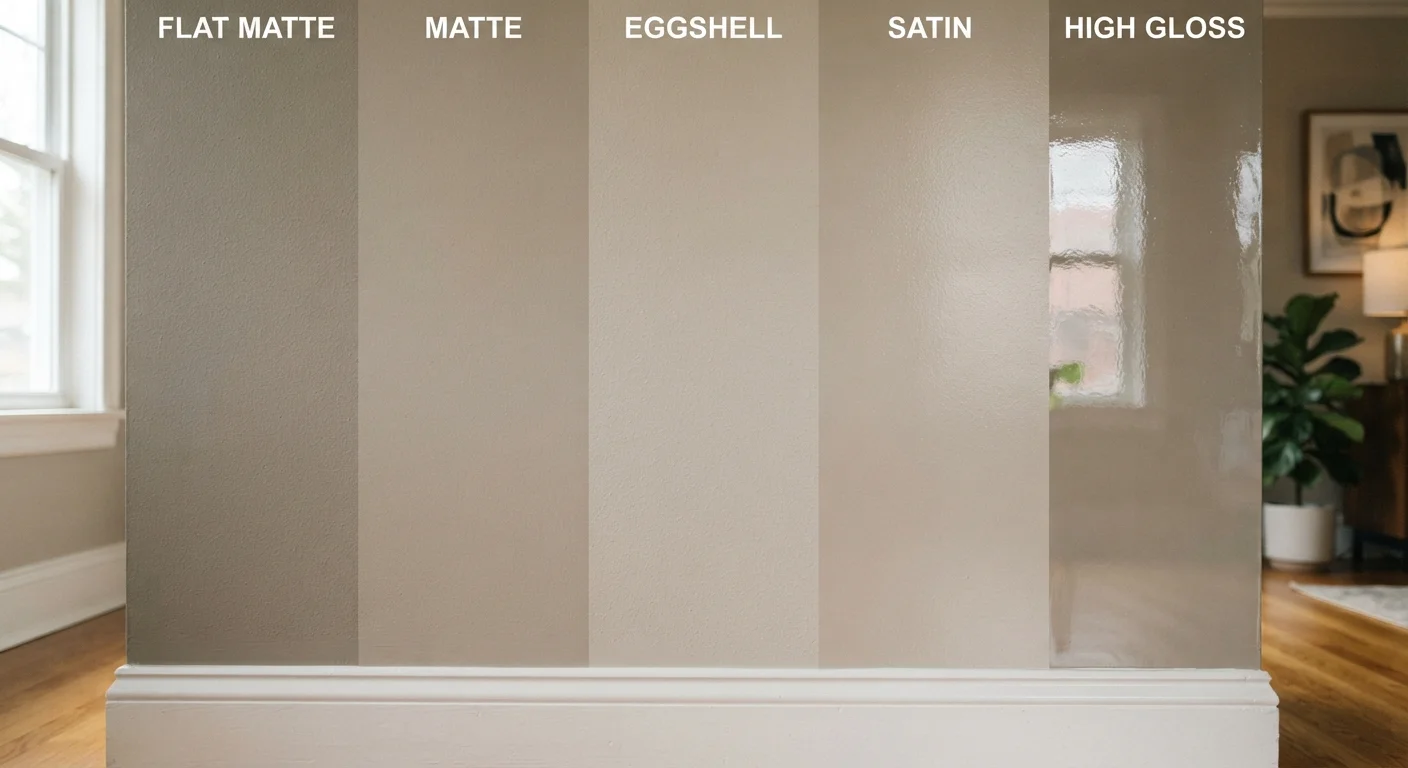
| Matte / Flat - Best For | Ceilings, low-traffic bedrooms, hiding surface flaws |
| Eggshell - Best For | Living rooms, dining rooms, general-purpose walls |
| Satin - Best For | Kitchens, bathrooms, hallways, children's rooms |
| Semi-Gloss - Best For | Trim, doors, window casings, high-moisture surfaces |
| Gloss - Best For | Cabinetry, furniture, decorative architectural details |
| Washability Scale | Increases from matte (least) to gloss (most) |
Why Paint Finish Matters as Much as Color
Most homeowners spend the bulk of their decision-making time picking a color, then grab whatever finish is on the shelf. That's an easy mistake to make - and one of the most common reasons a freshly painted room feels off. Paint finish, also called sheen level, controls how much light a painted surface reflects. That affects how the color reads, how easy the wall is to clean, and how long the paint holds up to daily wear.
There are five main finishes you'll encounter at any paint counter: matte, eggshell, satin, semi-gloss, and gloss. Each sits at a different point on the reflectivity spectrum, and each has strengths that suit certain rooms and surfaces. Understanding where those strengths lie will save you time, money, and a second coat of regret.
| Matte / Flat - Best For | Ceilings, low-traffic bedrooms, hiding surface flaws |
| Eggshell - Best For | Living rooms, dining rooms, general-purpose walls |
| Satin - Best For | Kitchens, bathrooms, hallways, children's rooms |
| Semi-Gloss - Best For | Trim, doors, window casings, high-moisture surfaces |
| Gloss - Best For | Cabinetry, furniture, decorative architectural details |
| Washability Scale | Increases from matte (least) to gloss (most) |
The Five Finishes, From Flat to High-Shine
Matte (Flat) - The lowest sheen on the scale. Matte paint absorbs light rather than reflecting it, which helps hide surface imperfections like drywall patches, nail holes, and minor dings. It delivers the richest, most saturated color appearance. The tradeoff: matte is the least washable finish and can scuff or stain when scrubbed. It works well on low-traffic ceilings and adult bedrooms where walls rarely need wiping down.
Eggshell - Named for the faint, soft sheen of an actual eggshell, this finish sits just above matte. It hides imperfections reasonably well while offering noticeably better moisture and scuff resistance. Eggshell is a go-to for living rooms and dining rooms - spaces that see regular use but aren't exposed to heavy splashing or grease.
Satin - A smooth, velvety sheen that reflects more light than eggshell without crossing into glossy territory. Satin is easier to wipe clean, holds up well in humid conditions, and works reliably in kitchens, bathrooms, hallways, and children's rooms. It does tend to highlight application marks like lap lines or brush strokes, so choosing the right application tool matters more with this finish.
Semi-Gloss - Noticeably shiny and highly moisture-resistant. Semi-gloss is the standard choice for trim, doors, window casings, and baseboards because it pops visually against wall color and withstands repeated cleaning. It's also common in bathrooms and kitchens where steam and grease are ongoing concerns. On large wall surfaces, semi-gloss can emphasize every imperfection, so proper surface prep is critical.
Gloss - The highest sheen available. Gloss reflects light almost like a lacquer, creating a dramatic, durable finish that's very easy to clean. It's used most on cabinetry, furniture, and architectural details rather than broad wall surfaces, where the amplified reflectivity can become overwhelming and any surface flaw will show clearly.
Sheen Level
A measure of how much light a dried paint film reflects. Higher sheen means more reflectivity, which increases durability and washability but makes surface imperfections more visible.
Matte Finish
A flat, non-reflective paint finish that absorbs light. It hides surface flaws effectively but is the least resistant to scrubbing and staining.
Eggshell Finish
A low-sheen paint finish with a faint, soft glow similar to the surface of an eggshell. It balances a clean appearance with moderate washability.
Satin Finish
A mid-level sheen with a smooth, velvety appearance. Satin resists moisture and cleans more easily than eggshell, making it suitable for busy household areas.
Semi-Gloss Finish
A noticeably shiny finish that is highly moisture-resistant and easy to wipe clean. Commonly used on trim, doors, and surfaces exposed to grease or steam.
Gloss Finish
The highest-sheen paint option, reflecting light intensely for a lacquer-like appearance. Used primarily on cabinetry and decorative details rather than broad wall surfaces.
Matching Finish to Room and Surface
A simple rule of thumb: the harder a surface works, the higher the sheen it generally needs. Walls in a child's bedroom take more abuse than walls in a guest room. A kitchen backsplash faces grease and moisture daily. Trim takes knocks from furniture and shoes.
If a painted surface looks uneven after it dries, the finish choice can sometimes be a factor - lower sheens are more forgiving, while higher sheens reveal prep problems. For a deeper look at coverage issues, see why freshly painted walls can still look patchy even after two coats.
When in doubt, eggshell and satin cover the widest range of interior walls for most households. Save matte for ceilings and accent walls in low-traffic zones, and reserve semi-gloss and gloss for trim and surfaces that need to stand up to scrubbing. Matching sheen to function - not just preference - is the straightforward logic that makes paint jobs last.