

Key Takeaways
- Soil pH controls which nutrients are chemically available to plant roots, regardless of how much fertilizer you apply.
- Most vegetables and flowering plants thrive in a pH range of 6.0 to 7.0.
- Inexpensive soil test kits or local cooperative extension labs can give you an accurate pH reading.
- Lime raises pH in acidic soil; sulfur or acidifying fertilizers lower it in alkaline soil.
- pH shifts gradually - amending soil is a process measured in months, not days.
- Ignoring pH is one of the most common reasons otherwise healthy-looking gardens underperform.
Soil pH
Soil pH is a measure of how acidic or alkaline your soil is, rated on a scale from 0 to 14. A reading of 7.0 is neutral - values below 7 are acidic and values above 7 are alkaline. Most garden plants grow best in a slightly acidic to neutral range, roughly 6.0 to 7.0. The pH level directly controls how well plants can absorb nutrients from the soil.
pH stands for 'potential of hydrogen' and reflects the concentration of hydrogen ions in the soil solution. Even small shifts on the scale represent significant changes, since pH is logarithmic.
Why pH Is the Hidden Variable in Your Garden
When plants struggle - yellowing leaves, stunted growth, poor flowering - gardeners often reach for more fertilizer. But if soil pH is off, adding nutrients rarely helps. pH determines whether the minerals already in your soil are in a form plant roots can actually use. Think of it as a chemical gatekeeper: the right pH keeps the gate open; the wrong pH locks it shut.
Nitrogen, phosphorus, iron, manganese, and other essential nutrients all have specific pH ranges where they become available. In highly acidic soil (below 6.0), aluminum and manganese can dissolve to toxic levels while phosphorus becomes bound and inaccessible. In alkaline soil (above 7.5), iron and zinc become nearly insoluble, causing deficiency symptoms even in well-fertilized beds.
Understanding this relationship is foundational - whether you're starting a vegetable garden from scratch or troubleshooting an established plot that hasn't performed as expected.
6.0-7.0
Optimal pH range for most vegetable crops
This range is widely cited by university cooperative extension services across the US as the window where the broadest set of nutrients are plant-available.
~14 units
Full span of the soil pH scale
Because the pH scale is logarithmic, a soil at pH 5.0 is ten times more acidic than one at pH 6.0, making even small numerical differences significant for plant health.
3-6 months
Typical time for lime to raise soil pH noticeably
According to general agronomic guidance, lime amendments require time and moisture to react with soil; results are rarely visible within weeks.
How to Test Your Soil pH
Testing is simpler than most gardeners expect. Here are the main approaches:
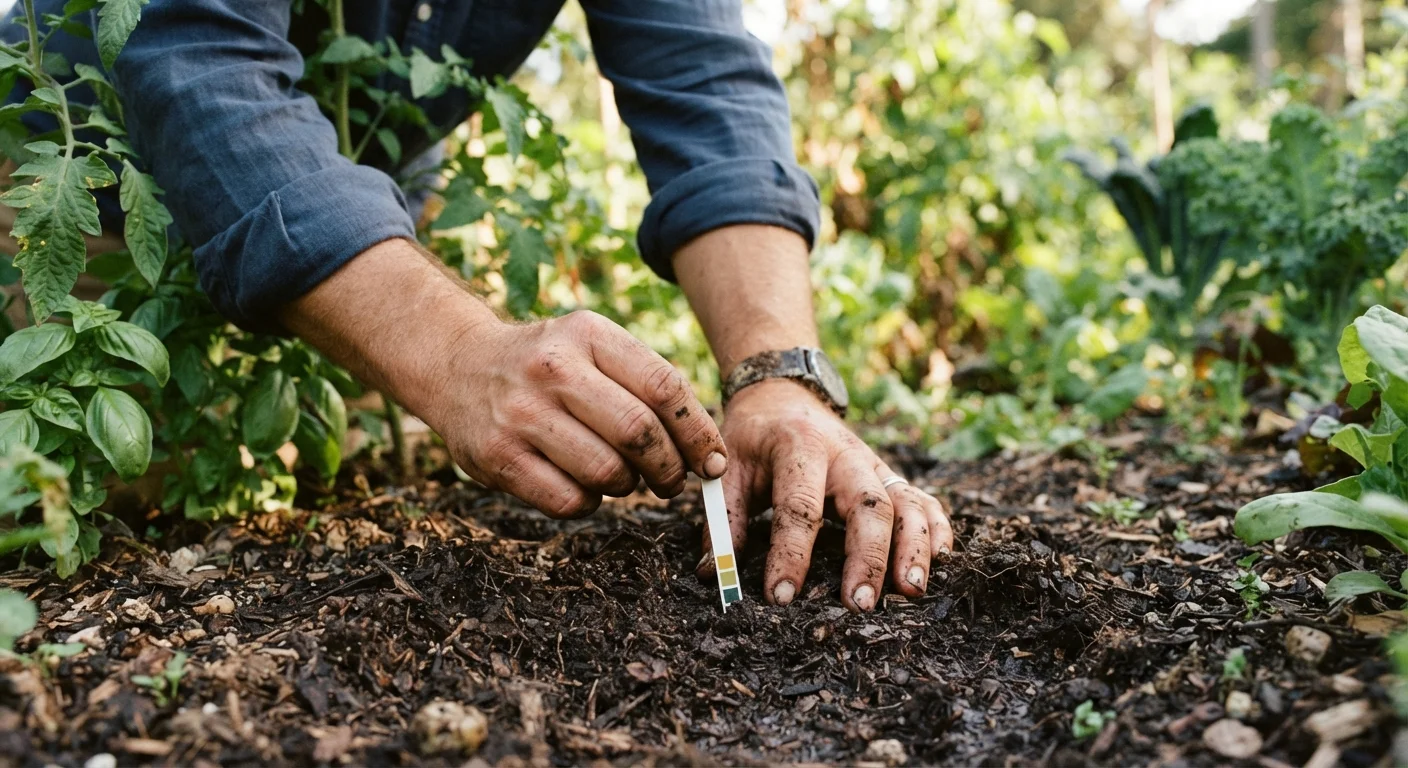
- Paper test strips: Dip a strip into a moistened soil sample. Color changes indicate approximate pH. These are inexpensive and fine for a general read.
- Digital pH meters: Insert a probe directly into damp soil for a numeric reading. More precise than strips, and reusable over time.
- Cooperative extension lab tests: Many US university extension programs test soil samples for a small fee and often include specific amendment recommendations alongside pH results. This is the most comprehensive option.
For accuracy, collect small amounts of soil from several spots across the planting area, mix them together, and test that combined sample. A single scoop from one corner can give misleading results. Test at a depth of 4 to 6 inches - the primary root zone for most garden plants.
Test Multiple Spots, Not Just One
Soil pH can vary noticeably within a single garden bed, especially if different areas have received different amendments, mulches, or watering histories. Mixing samples from five or six spots across the area gives a more representative result. Label bags by zone if you suspect significant variation between beds.
Adjusting pH: Raising and Lowering It Safely
Once you know your pH, you can amend intentionally. Two common adjustments are:
Raising pH (Making Soil Less Acidic)
Ground limestone - either calcitic or dolomitic - is the standard amendment for acidic soil. Dolomitic lime also adds magnesium, which benefits some deficient soils. Work the lime into the top several inches of soil and water it in. Application rates vary by soil type: sandy soils require less lime than clay-heavy soils to achieve the same shift. Follow package guidance or extension recommendations based on your test results.
Lowering pH (Making Soil Less Alkaline)
Elemental sulfur is widely used to acidify alkaline soil. Soil bacteria convert it to sulfuric acid over weeks, gradually lowering pH. Acidifying fertilizers - those containing ammonium sulfate or similar compounds - can also contribute to long-term acidification. Pine needle mulch and peat moss are sometimes used but have a modest and slow effect.
Avoid guessing at quantities. Over-correcting pH creates new problems. Apply amendments based on test results and retest before adding more. This patience-first approach is also worth applying to other soil health habits - our guide on things that quietly damage garden soil explains how well-intentioned choices can have slow, compounding effects.
Plant Preferences and Matching pH to Your Garden
Not every plant wants the same pH. Knowing your plants' preferences helps you decide whether to amend broadly or create micro-zones with slightly different conditions.
| pH Range | Plant Examples |
|---|---|
| 4.5 - 5.5 (acidic) | Blueberries, azaleas, rhododendrons, camellias |
| 5.5 - 6.5 (mildly acidic) | Potatoes, strawberries, peppers, most conifers |
| 6.0 - 7.0 (near-neutral) | Tomatoes, lettuce, beans, carrots, roses, lawn grass |
| 7.0 - 7.5 (mildly alkaline) | Asparagus, beets, cabbage, lilacs |
If your garden includes both acid-loving shrubs and neutral-preferring vegetables, consider separating them into distinct beds or containers with independently managed soil. The choice between raised beds and in-ground planting is partly shaped by how much control you want over soil composition.
Keeping pH Stable Over Time
pH naturally drifts. Rainfall leaches calcium and magnesium from soil, gradually acidifying it. Heavy irrigation in regions with alkaline water can push pH in the opposite direction. Fertilizer choices, organic matter additions, and plant uptake all play a role too.
Building an annual soil-testing habit - once in early spring before planting - gives you an early warning before drift causes visible plant damage. Consistent use of compost helps buffer pH naturally, because decomposed organic matter has a moderating effect on extreme swings in either direction.
For gardeners thinking more broadly about soil biology, organic vs. synthetic fertilizers affect not just nutrient delivery but the long-term chemical environment your plants live in. Understanding these connections turns routine garden tasks into a coherent, soil-first strategy.