
Natural Sugars vs. Added Sugars: A Meaningful Difference or Marketing Noise?

Key Takeaways
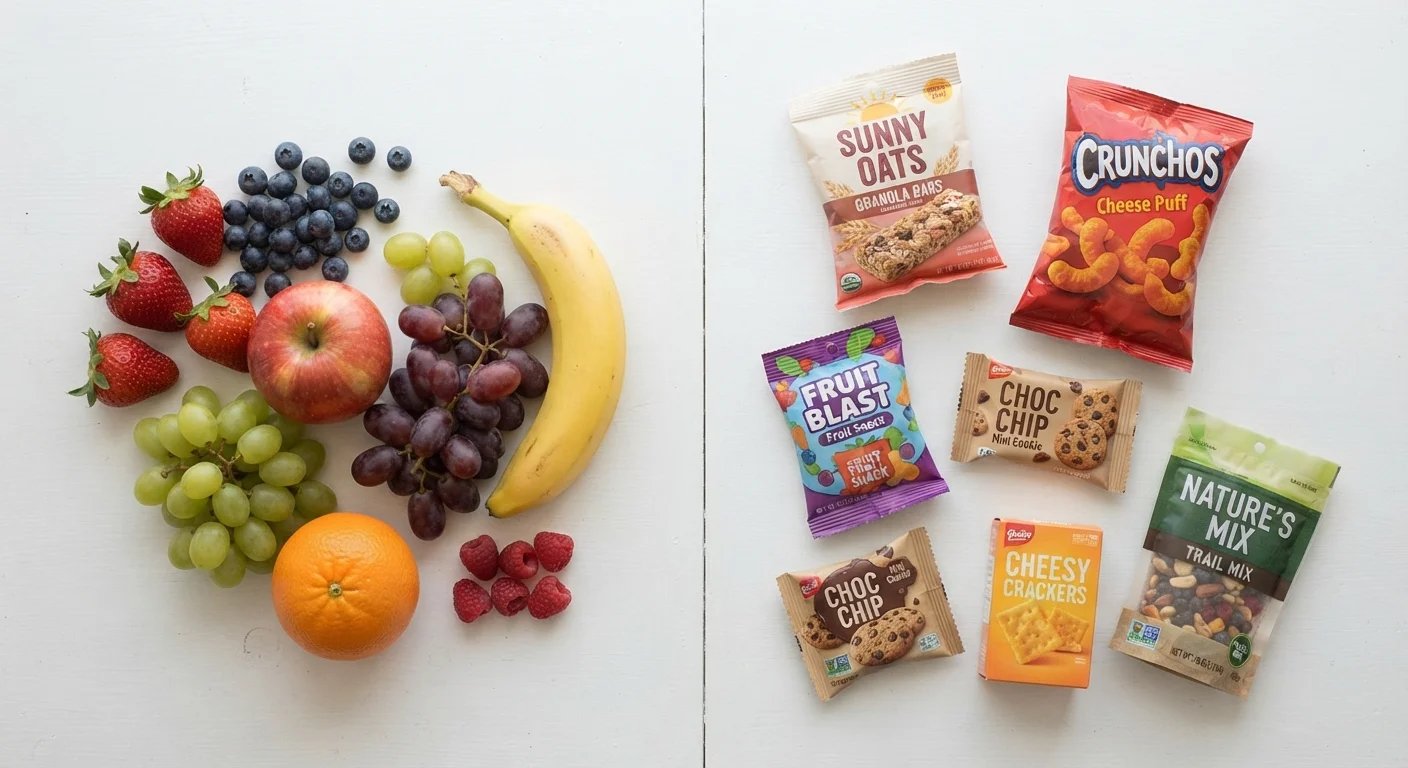
- Natural and added sugars are chemically similar, but the food matrix around them changes how the body responds.
- Added sugars contribute calories without the fiber, vitamins, or minerals found in whole-food sugar sources.
- The FDA requires added sugar content to appear separately on Nutrition Facts labels, making it easier to track.
- Health guidelines generally recommend limiting added sugars to less than 10% of daily calorie intake.
- Whole fruits and dairy are not concerning sugar sources for most healthy adults when eaten in typical portions.
- Food marketing terms like 'no refined sugar' or 'sweetened with fruit juice' can obscure meaningful added sugar content.
Option A
Natural Sugars
Sugars that occur inherently within whole, unprocessed foods.
Best for: Everyday energy needs supported by fiber, vitamins, and minerals found in fruits, vegetables, and dairy.
Option B
Added Sugars
Sugars and sweeteners incorporated into foods during manufacturing or preparation.
Best for: Understanding where excess sugar intake typically originates and how to limit it effectively.
If you want to reduce overall sugar intake without giving up nutritious foods
Natural Sugars
Prioritizing whole foods with naturally occurring sugars means you retain fiber and micronutrients that support satiety and metabolic balance.
If you're trying to identify where hidden sugars lurk in your diet
Added Sugars
Focusing specifically on the added sugars line of a nutrition label is the most direct way to spot and reduce excess intake from processed foods.
If you're managing blood sugar levels and want practical guidance
Natural Sugars
Whole-food sources of sugar, especially those high in fiber, tend to produce slower blood glucose responses - though anyone managing a condition should consult a healthcare provider.
If you want to decode health claims on food packaging
Added Sugars
Understanding how added sugars are defined and labeled helps cut through marketing language and evaluate products more accurately.
What Makes a Sugar 'Natural' or 'Added'?
At the molecular level, sucrose is sucrose, and fructose is fructose - regardless of whether it came from a mango or a bottle of high-fructose corn syrup. The chemical structures are largely identical. So when people argue the distinction is pure marketing noise, they have a point worth taking seriously.
But the classification still carries real meaning - it just isn't about the sugar molecule itself. Natural sugars are those present in whole, minimally processed foods: fructose in fruit, lactose in milk, and glucose across a wide range of plant foods. Added sugars are any sugars or caloric sweeteners - including honey, agave, cane juice, and corn syrup - incorporated into food during processing or preparation.
The key difference lies in what accompanies the sugar. A medium apple delivers its fructose alongside fiber, water, vitamins, and phytonutrients. A fruit-flavored candy delivers roughly the same sugars with virtually none of those supporting compounds. That surrounding food matrix is what changes the physiological story.
For a broader look at how these distinctions play out across nutrition labels, see how to read a nutrition label.
How the Body Actually Responds
Digestion doesn't begin with chemistry - it begins with food structure. Fiber in whole fruit physically slows sugar absorption, leading to a more gradual rise in blood glucose. Eating a handful of grapes produces a measurably different glycemic response than drinking an equivalent amount of grape juice, even though the sugar content is comparable.
Dairy lactose is similarly buffered: it arrives packaged with protein and fat, both of which slow gastric emptying and moderate insulin response. These are not trivial differences - sustained blood glucose spikes, repeated over time, are associated with increased metabolic stress, though the relationship is complex and individual responses vary.
| Criterion | Natural Sugars | Added Sugars |
|---|---|---|
| Source | Whole fruits, dairy, some vegetables | Syrups, sweeteners added during processing |
| Accompanying nutrients | Fiber, vitamins, minerals, water | Typically none |
| Blood glucose impact | Generally slower, buffered absorption | Often faster, less buffered |
| Shown on Nutrition Label | Part of 'Total Sugars' | Separate 'Added Sugars' line |
| Examples | Fructose in apples, lactose in milk | Cane sugar, corn syrup, honey in products |
| Guideline restrictions | No specific daily limit for most adults | Under 10% of daily calories (U.S. guidelines) |
Added sugars, stripped of this food matrix, enter the bloodstream more readily. They also tend to arrive in larger quantities: the American Heart Association notes that a single 12-ounce can of soda can contain more added sugar than most adults should consume in a full day under current dietary guidelines. Critically, that sugar contributes no protein, fiber, or micronutrients - a pattern sometimes described by nutrition researchers as "empty calories."
This connects to broader questions about how processing alters nutritional value - a dynamic also visible in grain refining, explored in our piece on whole grains vs. refined grains.
Decoding Labels and Marketing Claims
Since 2020, updated FDA Nutrition Facts labels in the U.S. are required to list added sugars as a separate line item beneath total sugars. This is a meaningful tool. It lets you see, for example, that a flavored yogurt may have 12g of total sugars - some from natural lactose, some from added sweetener - and distinguish between the two.
When 'Natural' Sweeteners Still Count as Added
Honey, maple syrup, agave nectar, and fruit juice concentrate are often marketed as healthier alternatives to cane sugar. However, the FDA classifies all of these as added sugars when used as ingredients, because they are no longer part of their original whole-food matrix. Metabolically, they function similarly to conventional sweeteners and should be counted toward your daily added sugar intake.
Marketing language, however, frequently obscures this line. Phrases like "no refined sugar," "sweetened naturally," or "made with fruit juice" can make a product sound healthier than its label warrants. Fruit juice concentrate used as a sweetener is still classified as an added sugar by the FDA - it behaves metabolically much like other added sweeteners when consumed outside the whole fruit.
Current U.S. dietary guidelines suggest limiting added sugar to less than 10% of total daily calories. For a 2,000-calorie diet, that works out to roughly 50 grams per day - a threshold many Americans exceed primarily through beverages and packaged snacks, not from eating fruit or dairy.
Understanding how added sugars fit into the larger picture of nutrition literacy is also discussed in our overview of common nutrition myths.
This article is for general informational and educational purposes only. It is not a substitute for professional medical or dietary advice. Readers with specific health concerns, including blood sugar management or metabolic conditions, should consult a qualified healthcare provider.