

Key Takeaways
- Most American adults consume roughly half the daily fibre that general dietary guidelines suggest.
- Fibre supports gut health, helps regulate blood sugar, and is associated with reduced risk of several chronic diseases.
- Soluble and insoluble fibre serve different functions, and a varied plant-based diet typically provides both.
- Whole grains, legumes, vegetables, and fruits are among the most fibre-dense everyday foods available.
- Increasing fibre intake gradually - alongside adequate water - helps avoid digestive discomfort.
- Fibre-rich foods are generally affordable and widely available in most US grocery stores.
Dietary Fibre
Dietary fibre refers to the parts of plant foods that the human body cannot fully digest or absorb. Unlike fats, proteins, or carbohydrates that break down and enter the bloodstream, fibre passes relatively intact through the stomach, small intestine, and colon. It comes in two main forms - soluble and insoluble - and each plays distinct roles in supporting overall health.
Soluble fibre dissolves in water to form a gel-like substance, slowing digestion and helping moderate blood glucose and cholesterol levels. Insoluble fibre does not dissolve and adds bulk to stool, supporting regular bowel movements.
The Fibre Gap: Why So Many Americans Fall Short
Despite decades of public health messaging about eating more plants, the majority of American adults consume far less fibre than generally recommended. Surveys conducted by national nutrition monitoring programmes consistently find average daily intake sitting in the range of 10-15 grams - well below the 25-38 gram targets most dietary guidelines outline. This shortfall is sometimes called the "fibre gap," and it has real consequences.
The primary driver is dietary pattern. Ultra-processed foods - which make up a large share of calories in many US households - are typically low in fibre because processing strips away the plant structures that contain it. White bread instead of whole grain, fruit juice instead of whole fruit, and refined snacks instead of nuts or legumes are common trade-offs that quietly erode daily fibre intake. As our guide to common nutrition myths explores, convenience foods often deliver less nutritional value than their marketing suggests.
~10-15g
Average daily fibre intake among US adults
National Health and Nutrition Examination Survey (NHANES) data consistently shows US adults consuming far below recommended intake levels.
25-38g
Daily fibre target for adult women and men
The Dietary Guidelines for Americans outline these general targets based on a 2,000 calorie reference diet for adults.
~95%
Share of Americans falling short of fibre recommendations
Research published in nutrition journals estimates the vast majority of the US population does not meet daily fibre intake recommendations.
What Fibre Actually Does in the Body
Fibre's reputation as a digestive aid is well-earned but incomplete. Its effects extend across multiple body systems.
Gut Health and the Microbiome
The colon is home to trillions of microorganisms collectively called the gut microbiome. Soluble fibre - the kind found in oats, legumes, and certain fruits - ferments in the colon and feeds beneficial bacteria. These bacteria produce short-chain fatty acids (SCFAs) as a byproduct, which help maintain the lining of the colon, regulate inflammation, and may influence immune function. A diverse, fibre-rich diet is consistently associated with a more diverse gut microbiome, which researchers link to better overall health outcomes.
Blood Sugar Regulation
Soluble fibre slows the rate at which glucose enters the bloodstream after a meal. This moderating effect on blood sugar spikes is one reason dietary patterns high in fibre are associated with a lower risk of type 2 diabetes in large observational studies. It is important to note that these are associations from population research - fibre is one component of a broader healthy dietary pattern, not a standalone treatment.
Cardiovascular Health
Soluble fibre, particularly the beta-glucan found in oats and barley, is associated with modest reductions in LDL (low-density lipoprotein) cholesterol in clinical research. The mechanism involves fibre binding to bile acids in the gut, prompting the liver to draw cholesterol from the blood to make more. The American Heart Association highlights dietary fibre as part of a heart-healthy eating pattern.
Bowel Regularity
Insoluble fibre adds bulk and moisture to stool, helping it move through the digestive tract more efficiently. This supports regular bowel movements and may reduce the risk of constipation and related conditions such as diverticular disease.
“Dietary fibre is one of the most consistently beneficial components of the human diet, yet it remains chronically under-consumed in Western populations. The evidence linking adequate fibre intake to reduced risk of cardiovascular disease, type 2 diabetes, and colorectal cancer is among the most robust in nutritional epidemiology.”
— Walter Willett, Professor of Epidemiology and Nutrition, Harvard T.H. Chan School of Public Health
Where to Find Fibre: Practical Food Sources
Fibre is found exclusively in plant foods. Animal products - meat, dairy, eggs - contain none. The good news is that many of the most fibre-dense foods are also among the most affordable items in the grocery store.
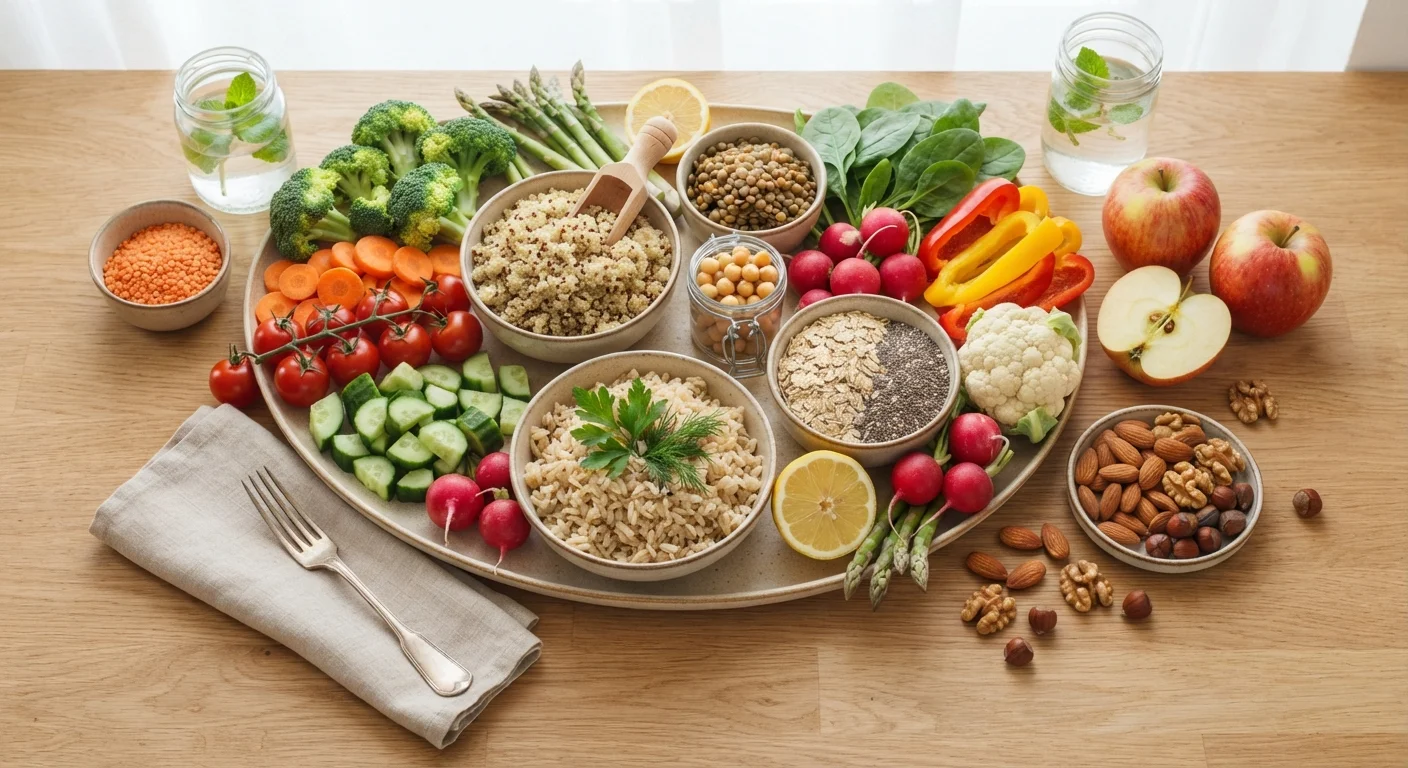
- Legumes: Lentils, black beans, chickpeas, and kidney beans consistently rank among the highest fibre foods available, delivering 6-9 grams per half-cup cooked serving. Canned varieties are convenient and nutritionally comparable to dried.
- Whole grains: Oats, barley, quinoa, brown rice, and whole wheat bread and pasta all provide meaningful fibre. Choosing whole grain versions over refined counterparts is one of the simplest dietary upgrades.
- Vegetables: Artichokes, broccoli, Brussels sprouts, carrots, and sweet potatoes are particularly high in fibre. Eating the skin of root vegetables preserves additional fibre.
- Fruits: Pears, apples, raspberries, and avocados are standout sources. Eating whole fruit rather than drinking juice preserves the fibre that processing removes.
- Nuts and seeds: Chia seeds, flaxseeds, almonds, and pistachios add fibre alongside healthy fats and protein.
For readers thinking about nutritional value alongside budget, our grocery shopping nutrition guide offers practical strategies for identifying high-value foods on store shelves. Many fibre-rich staples - dried lentils, oats, frozen vegetables - are also covered in our article on cutting grocery costs without cutting nutrition.
Build Up Fibre Gradually
If your current diet is low in fibre, aim to add one or two new plant-based foods per week rather than overhauling everything at once. Pair each increase with an extra glass of water. This measured approach lets your gut microbiome adjust and significantly reduces the likelihood of bloating or discomfort.
How to Increase Fibre Without the Discomfort
One reason people struggle to maintain higher fibre intake is the digestive adjustment period. When fibre intake increases quickly, gut bacteria need time to adapt, and temporary bloating or gas is common. The solution is gradual change rather than avoidance.
A practical approach involves adding one or two high-fibre foods to your existing meals at a time. Swap white bread for whole grain, stir a handful of lentils into soup, or add berries to breakfast. Drinking sufficient water throughout the day is equally important - insoluble fibre works most effectively when it can absorb fluid and add bulk.
Most adults can meaningfully increase their fibre intake through whole foods alone without needing supplements. For those with existing digestive conditions or specific health concerns, it is worth consulting a registered dietitian or physician before making significant dietary changes.
For a broader foundation on building nutritious eating habits, see our beginner's guide to nutrition, which covers the core principles behind a balanced everyday diet.
This article is for general informational and educational purposes only and does not constitute medical or dietary advice. Individual health needs vary. Consult a qualified healthcare professional before making significant changes to your diet, especially if you have an existing health condition.