

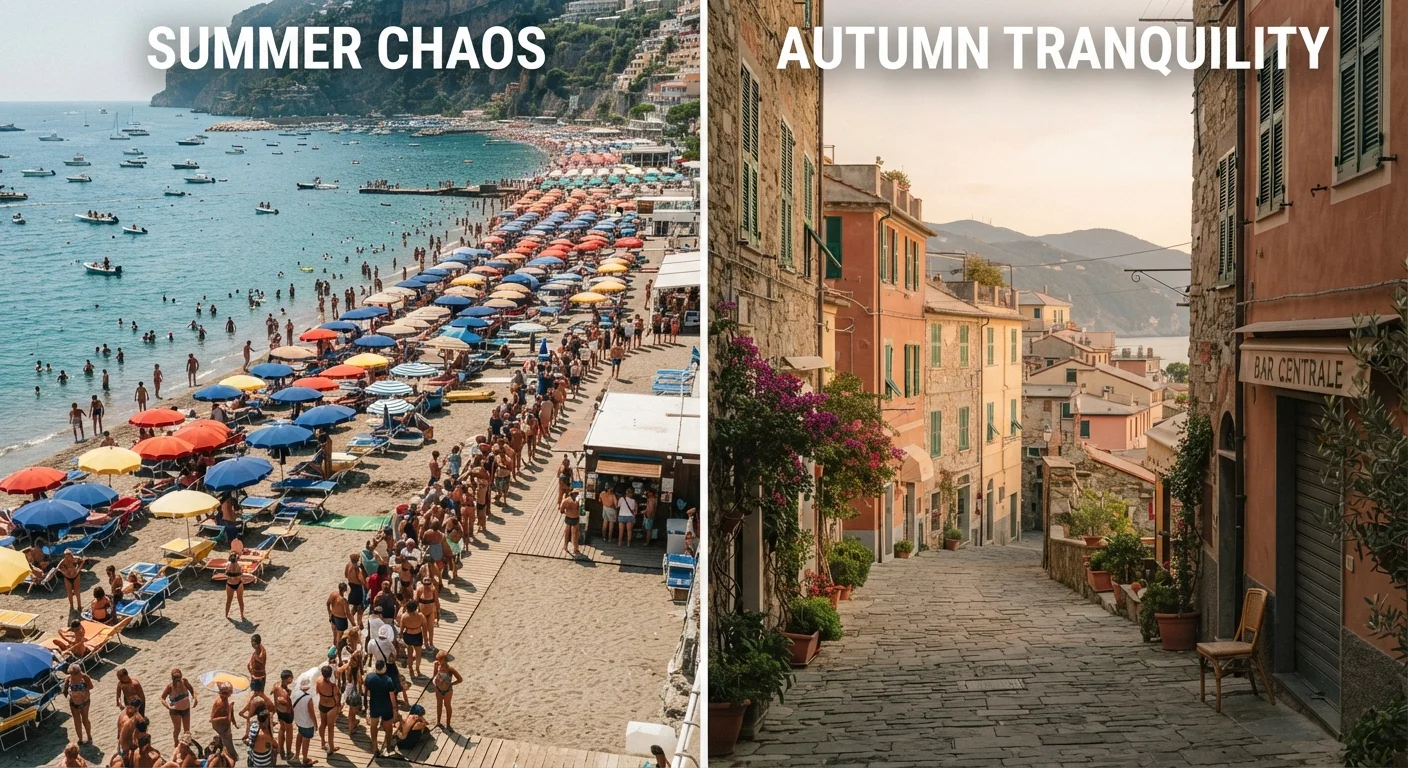
Key Takeaways
- Peak season guarantees the most predictable weather and the widest range of open attractions.
- Shoulder season typically offers lower prices, thinner crowds, and more authentic local atmosphere.
- Your travel priorities — flexibility, budget, experience type — should drive the timing decision.
- Some destinations reward peak-season visits; others are genuinely better outside the rush.
- Booking lead time and trip flexibility matter as much as which season you choose.
Most reliable weather and outdoor conditions
Peak season aligns with a destination's optimal climate window, reducing the risk of weather disrupting plans. For weather-dependent activities like hiking, beach trips, or outdoor festivals, this predictability has real value.
Full range of attractions and services open
Seasonal restaurants, tours, ferry routes, and visitor facilities are most likely to be fully operational during peak periods. You're less likely to arrive and find a key experience unavailable.
Lively atmosphere and programmed events
High season brings festivals, outdoor concerts, and a social energy that suits travelers who want a vibrant destination rather than a quiet one. Some peak-season events are themselves the reason to visit.
Easier to plan and book with confidence
More accommodation, tour, and transport options are available during peak, making advance planning more straightforward. Travelers with firm dates benefit from a wider selection when booking early.
Higher prices across flights, hotels, and tours
Demand-based pricing means peak season consistently commands a premium on most costs. The difference between peak and shoulder pricing can be substantial at popular destinations, sometimes exceeding 30–50% on accommodation.
Crowds at major sites reduce enjoyment
Iconic attractions become difficult to experience meaningfully when visitor numbers are at their highest. Queue times are longer, spontaneity is harder, and the sense of discovery is often lost in a crowd.
Advance booking pressure limits flexibility
Popular destinations in peak season typically require booking months ahead for preferred accommodation and experiences. Last-minute changes become costly or impossible without losing deposits.
Overextended local services and staff
Restaurants, transport systems, and hospitality staff are operating at or beyond capacity during peak. This often translates to slower service, higher stress, and a less personal experience.
Our Verdict
Neither peak nor shoulder season is the universally smarter choice — it depends on what you actually want from the trip. Peak season delivers certainty: ideal conditions, maximum infrastructure, and everything open. Shoulder season rewards flexibility and patience with lower costs, quieter sites, and often a more grounded travel experience. The right answer comes from honestly weighing your priorities before you book.
Travelers with firm dates, specific weather needs, or family school-holiday constraints will generally find peak season worth the premium; budget-conscious or flexible travelers who can tolerate some unpredictability are typically better served by shoulder timing.
Why the Peak vs. Shoulder Question Actually Matters
Timing is one of the highest-leverage decisions in any trip plan — it affects price, crowd density, weather, and which experiences are even available. Yet most travelers default to peak season out of habit or convenience rather than deliberate choice.
Peak season is defined by the highest visitor volume for a given destination, typically driven by school holidays, favorable weather windows, or cultural events. Shoulder season — the periods flanking peak — often preserves many of a destination's core advantages while shedding the worst of the crowds and costs. For a fuller breakdown of how shoulder season works, see what defines shoulder season and how it works.
Understanding the genuine trade-offs — rather than defaulting to either extreme — puts you in a position to make a deliberate call that fits your trip rather than someone else's travel calendar.
The Case for Peak Season
Peak season exists for a reason: it typically represents the period when a destination is objectively at or near its best. Beaches have calmer water and more sunshine hours, mountain trails are snow-free, and the full slate of restaurants, tours, and attractions are operational.
Most reliable weather and outdoor conditions
Peak season aligns with a destination's optimal climate window, reducing the risk of weather disrupting plans. For weather-dependent activities like hiking, beach trips, or outdoor festivals, this predictability has real value.
Full range of attractions and services open
Seasonal restaurants, tours, ferry routes, and visitor facilities are most likely to be fully operational during peak periods. You're less likely to arrive and find a key experience unavailable.
Lively atmosphere and programmed events
High season brings festivals, outdoor concerts, and a social energy that suits travelers who want a vibrant destination rather than a quiet one. Some peak-season events are themselves the reason to visit.
Easier to plan and book with confidence
More accommodation, tour, and transport options are available during peak, making advance planning more straightforward. Travelers with firm dates benefit from a wider selection when booking early.
Predictability is the central benefit. If you have limited vacation days or are traveling with children on a school-year schedule, peak season reduces the risk of a key attraction being closed, a seasonal restaurant being shuttered, or weather upending the plan. Families especially tend to find the trade-off worthwhile: fixed-date bookings align naturally with peak-season travel, where advance reservations are both possible and necessary.
There's also a social dimension: peak season at popular destinations means a livelier atmosphere, more fellow travelers for spontaneous connections, and events specifically programmed for high-season visitors. For some destinations — a carnival, a major cultural festival, a once-yearly natural phenomenon — peak timing isn't just convenient, it's the point. See planning a trip around a major event or festival for how to approach that complexity.
The Case for Shoulder Season
Shoulder season is where many experienced travelers find the best overall value — not just financially, but experientially. The trade-off isn't simply cheaper prices for worse conditions; it's often a meaningfully different kind of trip.
Higher prices across flights, hotels, and tours
Demand-based pricing means peak season consistently commands a premium on most costs. The difference between peak and shoulder pricing can be substantial at popular destinations, sometimes exceeding 30–50% on accommodation.
Crowds at major sites reduce enjoyment
Iconic attractions become difficult to experience meaningfully when visitor numbers are at their highest. Queue times are longer, spontaneity is harder, and the sense of discovery is often lost in a crowd.
Advance booking pressure limits flexibility
Popular destinations in peak season typically require booking months ahead for preferred accommodation and experiences. Last-minute changes become costly or impossible without losing deposits.
Overextended local services and staff
Restaurants, transport systems, and hospitality staff are operating at or beyond capacity during peak. This often translates to slower service, higher stress, and a less personal experience.
Cost is the most immediate advantage. Airfares, hotel rates, and package prices routinely drop when demand eases, and last-minute availability opens up at properties that would be fully booked in high season. For practical frameworks on making this work, stretching a travel budget across any destination covers the underlying principles that apply regardless of where you're going.
Beyond cost, shoulder travel tends to surface a more authentic version of a place. Locals aren't overwhelmed, staff are less stretched, and iconic sites become actually enjoyable rather than something to endure behind a wall of other tourists. The photography is better, the queues are shorter, and a casual conversation at a café is more likely to happen.
Shoulder Season Varies by Destination
There's no universal shoulder season calendar — the dates depend entirely on the destination. A Mediterranean coastal town's shoulder period falls in May and October, while a ski resort's equivalent might be November and late March. Always research the specific destination rather than applying a generic rule. Some destinations also have micro-seasons driven by local school holidays or regional events that shift crowd patterns independently of the main tourist calendar.
The main risk is variability. Weather is less guaranteed, some attractions or seasonal businesses may operate reduced hours or be fully closed, and the quieter atmosphere that's a feature in some destinations can feel like a bug in others — particularly beach resorts that genuinely go dormant outside summer.
How to Make the Decision for Your Trip
The right timing comes down to three honest questions:
- What's your weather tolerance? Some destinations have a narrow window where conditions are reliably good. Others have shoulder periods with weather nearly indistinguishable from peak. Research the actual climate data for your destination rather than relying on general assumptions.
- How flexible is your schedule? Travelers with firm dates — especially those constrained by school calendars or fixed leave — face a different calculus than those who can shift a trip by three weeks either direction. Fixed vs. flexible booking approaches maps this trade-off in detail.
- What kind of experience are you after? A buzzing beach resort in August and the same resort in late September are different trips. Neither is wrong — but only one of them is what you're looking for.
Also weigh trip length. A short break versus an extended trip changes the risk calculus: a rainy shoulder-season weekend stings more than a rainy few days within a two-week trip.
30–50%
Typical accommodation price drop in shoulder vs. peak
Industry travel analysts generally cite significant nightly rate reductions between peak and shoulder periods at popular leisure destinations, though actual variance depends heavily on specific location and dates.
2–4 weeks
Typical shoulder window either side of peak
Most destinations have shoulder periods spanning several weeks before and after peak, often with weather conditions close to peak-season quality but with noticeably fewer visitors.