
Key Takeaways
- Fare calendars display price variations across a range of dates, making it easier to spot lower-cost windows.
- Shifting departure or return dates by even one or two days can meaningfully change the fare you see.
- Midweek travel windows often — though not always — show lower fares than weekend departures.
- Combining fare calendar searches with price alerts improves your chances of catching a good fare.
- Flexible searching works best when your travel dates have at least some wiggle room.
What you will need
What Fare Calendars Actually Show You
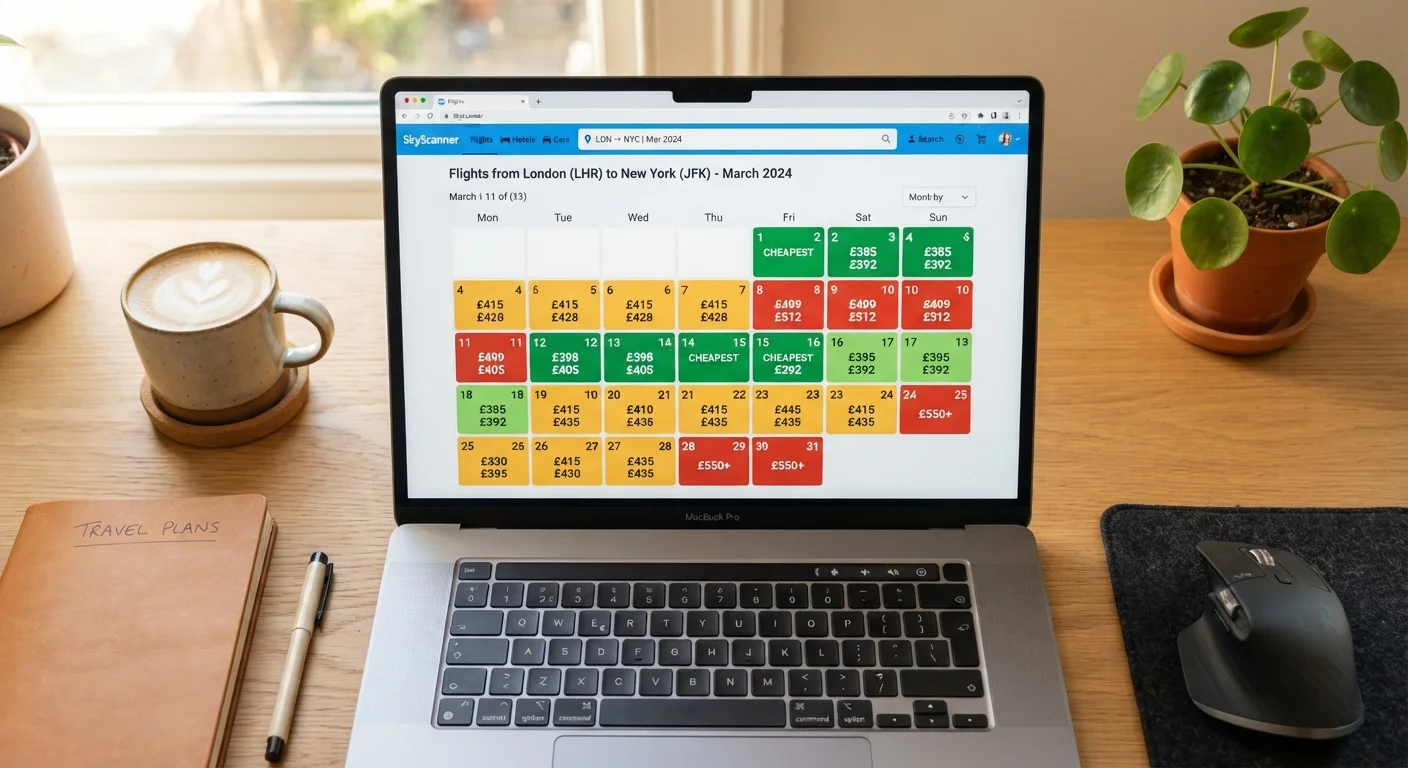
A fare calendar is a grid-style view built into many flight search tools that displays the lowest available fare for each day across a selected month — or sometimes several weeks in either direction from your target date. Instead of searching one date at a time, you can scan a range at a glance and identify which windows tend to carry lower prices.
It's worth understanding what these prices represent: they reflect the cheapest available fare in a given cabin class at the moment you search, not a guaranteed price. Airfare is dynamically priced, meaning the figures shift as seats fill and demand changes. If you want a deeper grounding in how that pricing logic works, the guide to online pricing mechanics covers the fundamentals well.
Fare calendars are most useful when you have genuine flexibility — even a two- or three-day window can make a difference. If your dates are completely fixed, the calendar still provides context, but you won't be able to act on what you see.
Use Multiple Search Tools for a Broader View
Different flight search tools can return different calendar results for the same route, partly because they index different fare classes or update their caches at different intervals. Running a fare calendar search on two separate platforms before settling on a date gives you a more complete picture of what's available.
How to Read and Use a Fare Calendar Effectively
Here's how to get the most out of fare calendar tools without wasting time chasing prices that won't hold.
Start with a destination and a date range, not a specific date
Open the flight search tool and enter your origin and destination, but instead of locking in a single departure date, look for the calendar or flexible dates view. Select a range that reflects your actual availability — typically one to four weeks. This gives the calendar enough room to surface meaningful price variation.
Scan for price clusters, not just the single lowest number
Look at the calendar holistically. Identify clusters of dates with similar lower prices rather than fixating on the single cheapest day. A window of three or four consecutive lower-priced days is more actionable than one isolated date, especially if you need some schedule flexibility for accommodations or other bookings.
Check both outbound and return dates independently
Most fare calendars let you run a separate flexible search for your return leg. Treat each direction as its own optimization exercise. A small shift on the return date — say, flying back on a Tuesday instead of a Sunday — can sometimes produce more savings than moving the outbound date at all.
Note the fare and open a fresh search to verify
Once you've identified a promising date combination, open a new search tab and enter those specific dates directly. Fare calendars sometimes display cached or approximate prices; the individual date search gives you the confirmed, bookable fare. Compare what you see with the calendar figure before proceeding.
Decide whether to book or set a price alert
If the verified fare is within a range you consider acceptable and your dates are confirmed, you have enough information to make a booking decision. If you have more lead time and the fare seems high relative to the calendar's other dates, consider setting a price alert for your preferred dates and checking back periodically. This approach works best when you have several weeks before you need to travel.
For context on how fixed versus flexible planning affects your overall approach, see fixed-date vs. flexible booking trade-offs.
Common Patterns Worth Knowing — and Their Limits
Fare calendars often reveal patterns that repeat across routes, though none are universal rules. Midweek departure dates — particularly Tuesday and Wednesday — frequently show lower fares on domestic routes compared to Friday or Sunday. For international itineraries, the patterns are less predictable and more route-dependent.
Shoulder periods around school holidays tend to show a visible drop-off in price on the calendar's edges — the days just before or just after a peak window. These edge dates can offer a practical compromise between travel timing and cost.
Patterns Are Tendencies, Not Guarantees
Pricing patterns vary significantly by route, season, carrier, and how far in advance you're searching. What holds for one domestic route may not apply to another. Treat calendar patterns as signals worth investigating, not rules you can count on — always verify fares directly before making schedule decisions based on them.
For a broader view of what pricing patterns actually hold up under scrutiny versus what's travel folklore, see common flight booking myths debunked. And if you want to combine fare calendar searches with automated monitoring, setting up travel price alerts walks through how those tools work alongside manual searching.
Finally, fare savings on flights are only one piece of a travel budget. The principles for stretching a travel budget covers the full picture — from timing decisions to on-the-ground spending.