

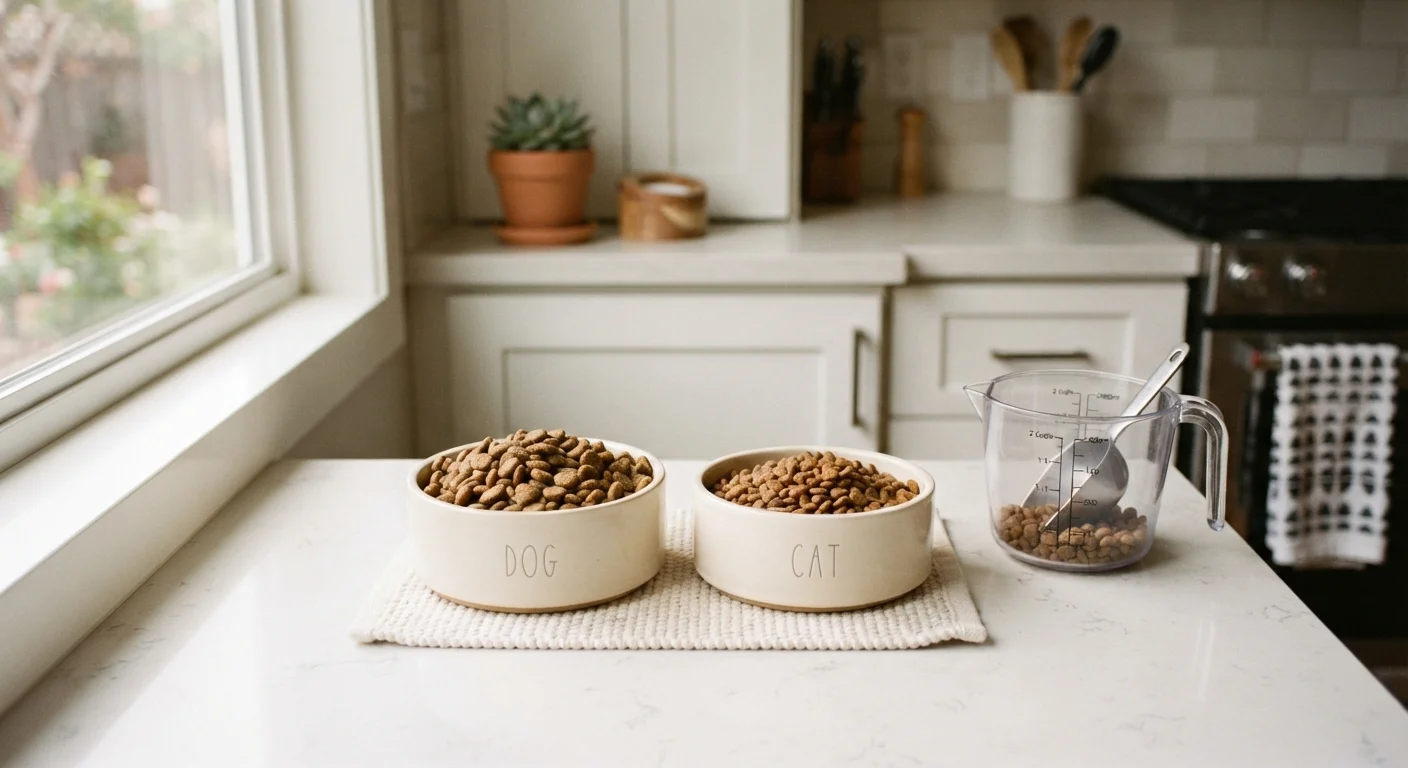
Key Takeaways
- Dogs and cats have meaningfully different nutritional needs - one-size-fits-all feeding rarely works.
- Meal-based feeding with measured portions is generally preferable to free-feeding for weight management.
- Feeding guidelines on packaging are starting points, not prescriptions - individual pets vary significantly.
- Life stage, activity level, and health status all influence how much and what your pet should eat.
- Regular weigh-ins and body condition scoring help catch portion drift before it becomes a weight problem.
What you will need
Why Feeding Fundamentals Matter More Than Food Brand
Pet owners frequently focus their energy on selecting the right brand or formula - grain-free vs. grain-inclusive, wet vs. dry, raw vs. cooked - while underestimating how much the how of feeding shapes their pet's health. Consistent meal timing, accurate portion measurement, and an understanding of species-specific nutritional requirements collectively have a greater day-to-day impact than any single food choice.
Dogs and cats are not interchangeable when it comes to nutrition. Cats require dietary taurine and cannot efficiently convert plant-based beta-carotene into vitamin A the way dogs can. Dogs can tolerate a broader macronutrient range. Both species benefit from foods that carry an AAFCO nutritional adequacy statement - this indicates the food has been formulated or tested to meet established minimum nutrient standards for a stated life stage. For a broader foundation, see the Pet Nutrition hub or the complete feeding roadmap from puppyhood to old age.
Always Consult Your Veterinarian
This article provides general educational information only - it is not veterinary advice. Every pet is an individual with unique health considerations. Work with your veterinarian to establish a feeding plan appropriate for your specific dog or cat, especially if your pet has a health condition, is overweight, or is at a life-stage transition.
What you feed matters, but how much and how often are equally consequential. Obesity is one of the most common preventable health problems in companion animals in the US, and it is largely a portioning and routine issue rather than a food quality issue.
Use a Kitchen Scale for Accuracy
Measuring cups can vary significantly in the amount they deliver - studies in veterinary nutrition have found pet owners routinely over-pour by 20-30% when using cups alone. A simple digital kitchen scale takes the guesswork out of portioning dry and wet food alike.
Setting Up a Practical Feeding Routine
Before working through the steps below, gather the tools and information you'll need.
What you will need
Digital kitchen scale
Accurately weigh food portions rather than relying on measuring cups, which can vary substantially.
Measuring cup (designated for pet food)
Estimate dry food portions when a scale is unavailable; useful as a secondary check.
Your pet's current food packaging
Reference the manufacturer's feeding guidelines and guaranteed analysis panel as a baseline.
Bathroom or pet scale
Track your pet's weight regularly to detect portion drift before it causes noticeable weight change.
Feeding log or notebook
Record daily meal amounts, treat counts, and weight readings to spot trends over time.
Once you have these in place, the steps that follow will guide you through establishing a routine grounded in your specific pet's needs. For a deeper look at structuring consistent meal timing, feeding schedules and portion control principles offers practical guidance on building a sustainable routine.
Identify your pet's life stage and health status
Before adjusting anything else, establish where your pet is in its life: puppy or kitten, adult, or senior. Nutritional requirements shift substantially across these stages. A growing puppy needs more protein and calories per pound of body weight than an adult; a senior dog may need fewer calories but more joint-supporting nutrients. If your pet has a diagnosed health condition - kidney disease, diabetes, food allergies - their dietary needs differ further. See how nutritional priorities shift across life stages for a deeper look at age-related changes.
Understand the core nutrient differences between dogs and cats
Dogs are omnivores and can derive energy from carbohydrates, fats, and proteins. Cats are obligate carnivores - they require certain nutrients, including taurine and arachidonic acid, that are found only in animal tissue and that their bodies cannot synthesize adequately on their own. Never feed a dog-formulated food to a cat as their sole diet, and vice versa. For a plain-language breakdown of key nutrients found on food labels, see nutrients every pet owner should understand. Cat owners can also explore a detailed primer on cat-specific nutrition.
Choose a feeding method: scheduled meals vs. free-feeding
Most veterinary nutrition guidance favors meal-based feeding over free-feeding - setting defined meal times and removing uneaten food after 20-30 minutes. This approach makes it easier to monitor appetite (a key health indicator), control caloric intake, and maintain a stable routine. Two meals per day suits most adult dogs and cats well; puppies and kittens typically need three to four smaller meals. Free-feeding, where food is available at all times, can work for some cats eating dry food but makes portion tracking nearly impossible and is strongly linked to feline obesity.
Calculate a starting daily portion using packaging guidelines
Packaging guidelines are the manufacturer's recommended starting point based on body weight. They are not a precise prescription - they're calculated for the average pet of that weight and often assume an intact, moderately active animal. Use the stated daily amount as your baseline, then divide it across the number of meals per day. Weigh the food rather than measuring by volume whenever possible for greater accuracy. Account for all calories your pet receives, including treats - treats should generally make up no more than 10% of daily caloric intake.
Monitor body weight and condition, then adjust portions
Weigh your pet every two to four weeks and track the results. A healthy adult pet should maintain a stable weight within a normal body condition range. If your pet is gaining weight steadily, reduce the daily portion by roughly 10% and reassess after three to four weeks. If they're losing weight unintentionally, increase slightly and consult your veterinarian to rule out underlying causes. Avoid making large, abrupt changes to food amount - gradual adjustment is easier on digestion and lets you interpret the body's response. Overfeeding is easier than most owners expect - small daily surpluses compound quickly.
Build in household safety awareness around food
Part of a sound feeding routine is knowing which common foods are harmful. Several everyday household items - grapes and raisins, xylitol (a sweetener found in sugar-free products), onions, garlic, chocolate, and macadamia nuts among them - are toxic to dogs and/or cats. Keeping these stored securely and educating all household members is a practical step that belongs in any feeding routine. Review a household safety reference on foods toxic to pets for a factual overview of the most common hazards.
Free-Feeding Risks Are Easy to Underestimate
Leaving food out all day (free-feeding) makes it very difficult to track how much your pet is actually consuming. For cats especially, this approach is associated with gradual weight gain. If you currently free-feed, consider transitioning to timed meals and consulting your vet about an appropriate daily calorie target.
This article is for general informational and educational purposes only and does not constitute veterinary advice. Always consult a licensed veterinarian regarding your individual pet's diet, health status, and nutritional needs.