

| Recommended Attic R-Value (Cold Climate) | R-49 to R-60 (U.S. Department of Energy Climate Zone recommendations) |
| Recommended Wall R-Value (Most U.S. Climates) | R-13 to R-21 (U.S. Department of Energy Climate Zone recommendations) |
| Closed-Cell Spray Foam R-Value per Inch | Approximately R-6 to R-7 (General industry specification range) |
| Standard Fiberglass Batt R-Value per Inch | Approximately R-3 to R-4 (General industry specification range) |
| Most Common DIY-Friendly Option | Batt and roll insulation |
| Best Moisture-Resistant Option for Basements | Rigid foam board or closed-cell spray foam |
What the R-Value Label Is Actually Telling You
Before comparing insulation materials, it helps to understand the one number that appears on every product label: R-value. R-value measures a material's resistance to heat flow - the higher the number, the more effectively it slows heat transfer between your living space and the outdoors.
R-value requirements vary by climate zone and location within the home. Attics in colder northern climates typically call for R-38 to R-60, while walls in the same region may only require R-13 to R-21. The U.S. Department of Energy publishes a zone-by-zone recommendation map that is worth consulting before purchasing any material.
One important nuance: R-value is measured per inch for some products and as a total assembly value for others. Always check whether the label reflects per-inch performance or the full installed thickness.
| Recommended Attic R-Value (Cold Climate) | R-49 to R-60 (U.S. Department of Energy Climate Zone recommendations) |
| Recommended Wall R-Value (Most U.S. Climates) | R-13 to R-21 (U.S. Department of Energy Climate Zone recommendations) |
| Closed-Cell Spray Foam R-Value per Inch | Approximately R-6 to R-7 (General industry specification range) |
| Standard Fiberglass Batt R-Value per Inch | Approximately R-3 to R-4 (General industry specification range) |
| Most Common DIY-Friendly Option | Batt and roll insulation |
| Best Moisture-Resistant Option for Basements | Rigid foam board or closed-cell spray foam |
The Four Main Insulation Types at a Glance
Most residential insulation falls into one of four categories. Each has distinct installation requirements, performance characteristics, and spaces where it genuinely excels.
R-Value
A measure of thermal resistance - how well a material slows the transfer of heat. Higher R-values indicate better insulating performance per unit of thickness.
Batt Insulation
Pre-cut panels of fibrous insulation material, typically fiberglass or mineral wool, sized to fit standard stud and joist cavities.
Blown-In Insulation
Loose-fill insulation material pneumatically blown into place using a machine, allowing it to conform around obstructions inside wall cavities or attics.
Closed-Cell Spray Foam
A dense spray foam insulation that expands minimally, achieves high R-values per inch, and also functions as a vapor and air barrier.
Open-Cell Spray Foam
A lighter, less dense spray foam that expands significantly and provides good air sealing, but has a lower R-value per inch than closed-cell and is not a vapor barrier.
Vapor Barrier
A material that resists the diffusion of moisture through walls, ceilings, or floors, reducing the risk of condensation and mold growth inside building cavities.
Rim Joist
The board running along the perimeter of a floor frame, sitting on top of the foundation wall. It is a common source of significant heat loss and air infiltration in homes.
Continuous Insulation
Insulation installed uninterrupted across structural members, eliminating thermal bridging through studs or joists and improving overall wall assembly performance.
Batt and Roll Insulation
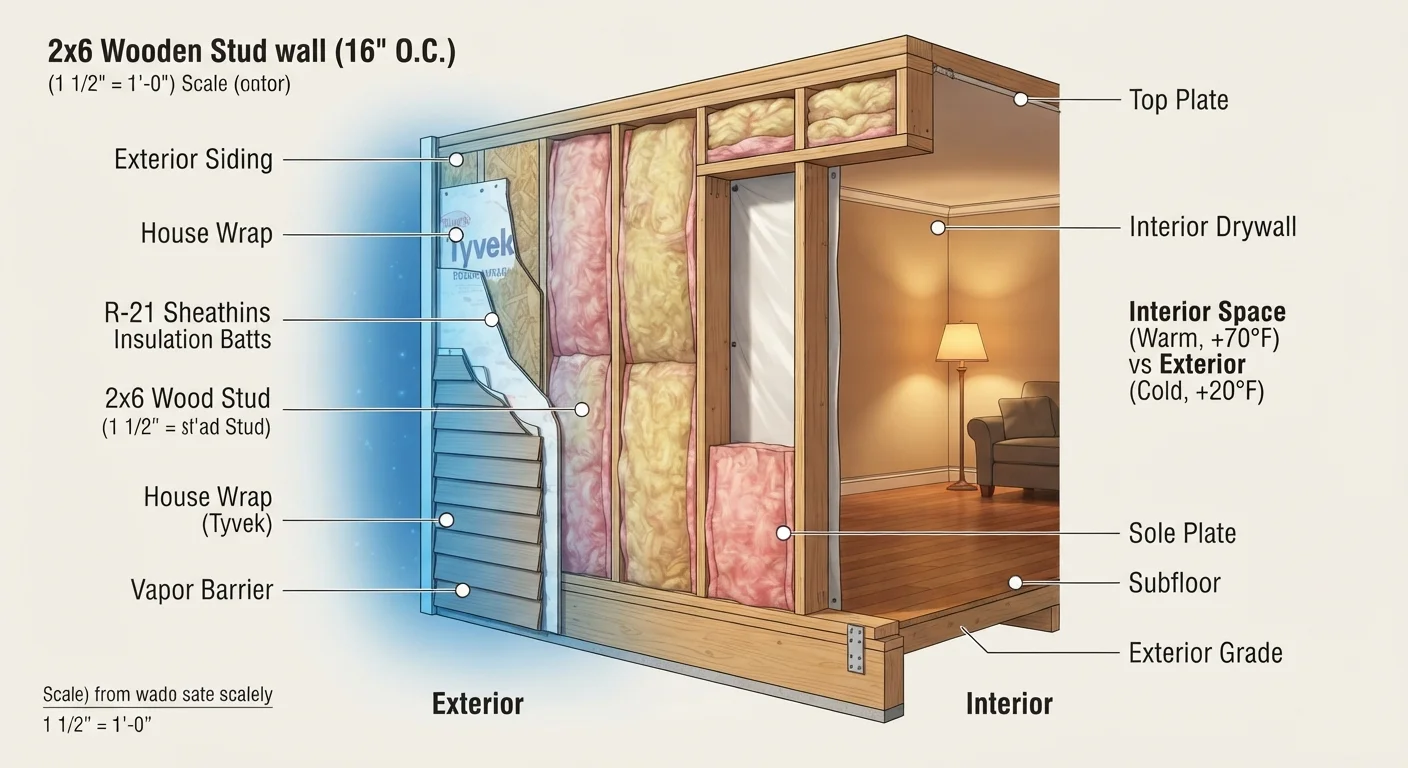
Typically made from fiberglass or mineral wool, batts come pre-cut to standard stud spacing (16 or 24 inches). They are the most widely used type for DIY projects because they require no special equipment - just a utility knife and basic protective gear. Best locations: exterior walls, floors above unheated crawl spaces, and attic ceilings between joists.
Blown-In (Loose-Fill) Insulation
Made from cellulose, fiberglass, or mineral wool, loose-fill insulation is blown into place using a rented blower machine. It fills irregularly shaped cavities and settles around obstructions like pipes and wiring far better than batts can. Best locations: attic floors, existing finished walls (through drilled holes), and hard-to-reach cavities.
Spray Foam Insulation
Available in open-cell and closed-cell formulations, spray foam expands on contact to seal gaps while simultaneously insulating. Closed-cell foam also acts as a vapor barrier. Because improper application can affect air quality and structural performance, most professionals recommend leaving large spray foam projects to licensed contractors. Best locations: rim joists, crawl space walls, cathedral ceilings, and areas with significant air-leakage issues.
Rigid Foam Board
Panels of expanded or extruded polystyrene (EPS or XPS) and polyisocyanurate offer high R-value per inch and moisture resistance. They can be cut with a utility knife and scored to fit. Best locations: basement walls, exterior sheathing, and under slab foundations.
When to Call a Licensed Contractor
Spray foam insulation - particularly two-component closed-cell products - involves chemical off-gassing during installation and requires proper personal protective equipment and ventilation. Large-scale spray foam jobs and any insulation work touching electrical panels, gas lines, or structural elements should be handled by a licensed professional. Always verify whether your local building code requires a permit for insulation upgrades in finished spaces.
Matching Insulation to Specific Home Zones
Choosing the right material is half the job - knowing exactly where to put it is the other half. Here is a zone-by-zone reference:
- Attic floor: Blown-in cellulose or fiberglass is efficient and cost-effective for large open areas. Add batts first if you are building up from a low starting point.
- Attic rafters (cathedral ceiling or conditioned attic): Closed-cell spray foam or rigid foam board, which can meet code requirements in thinner profiles.
- Exterior walls (new construction): Fiberglass or mineral wool batts sized to the stud cavity, with rigid board added to the exterior for continuous insulation.
- Exterior walls (existing): Blown-in insulation injected through small holes in drywall or siding without major demolition.
- Basement walls: Rigid foam board attached to concrete, or closed-cell spray foam - both resist moisture better than fiberglass batts in below-grade environments.
- Crawl space: Batts between floor joists for vented crawl spaces; rigid board or spray foam on walls for conditioned (sealed) crawl spaces.
- Rim joists: Cut-and-cobble rigid foam sealed with canned spray foam, or two-component spray foam kits - both seal air leaks effectively.
When in doubt about local code requirements, permit needs, or whether a space involves electrical or structural elements, consult a licensed insulation contractor or building inspector before starting work.