

| Soy protein status | Complete protein (all 9 essential amino acids) (U.S. Department of Agriculture, FoodData Central) |
| Lentils - protein per cooked cup | ~18 g (U.S. Department of Agriculture, FoodData Central) |
| Quinoa - protein per cooked cup | ~8 g (U.S. Department of Agriculture, FoodData Central) |
| Hemp seeds - protein per 3 tbsp | ~10 g (U.S. Department of Agriculture, FoodData Central) |
| Amino acid limiting factor in grains | Lysine (typically low) (General nutrition science consensus) |
| Amino acid limiting factor in legumes | Methionine (typically lower) (General nutrition science consensus) |
Why Plant Protein Deserves a Closer Look
Protein is essential for building and repairing tissues, producing enzymes, and supporting immune function. While animal foods have traditionally dominated protein conversations, plant sources cover a surprisingly broad nutritional range - and understanding that range helps you make more deliberate food choices.
If you're newer to thinking about nutrition overall, our nutrition foundations guide is a solid starting point before diving into specific nutrients.
One key concept to grasp upfront is amino acid completeness. Proteins are made from amino acids, nine of which the human body cannot produce on its own - these are called essential amino acids. Animal proteins typically contain all nine. Most plant proteins contain all nine as well, but often in lower quantities of one or more, which is why variety matters in a plant-focused diet.
Essential Amino Acids
The nine amino acids the human body cannot synthesize on its own and must obtain through food. They include histidine, isoleucine, leucine, lysine, methionine, phenylalanine, threonine, tryptophan, and valine.
Complete Protein
A protein source that contains all nine essential amino acids in amounts sufficient to support bodily functions. Soy and quinoa are plant-based examples.
Bioavailability
The proportion of a nutrient that is actually absorbed and used by the body. Plant proteins often have lower bioavailability than animal proteins due to naturally occurring compounds in plant cell walls.
Phytates
Naturally occurring compounds in legumes, grains, and seeds that can bind to minerals and reduce their absorption. Soaking or fermenting foods can help reduce phytate levels.
Complementary Proteins
Two or more protein sources that together supply all essential amino acids, compensating for each other's deficiencies. Rice and beans are a classic example.
Major Plant Protein Categories and Their Profiles
Plant proteins fall into a few broad categories, each with distinct strengths:
Legumes
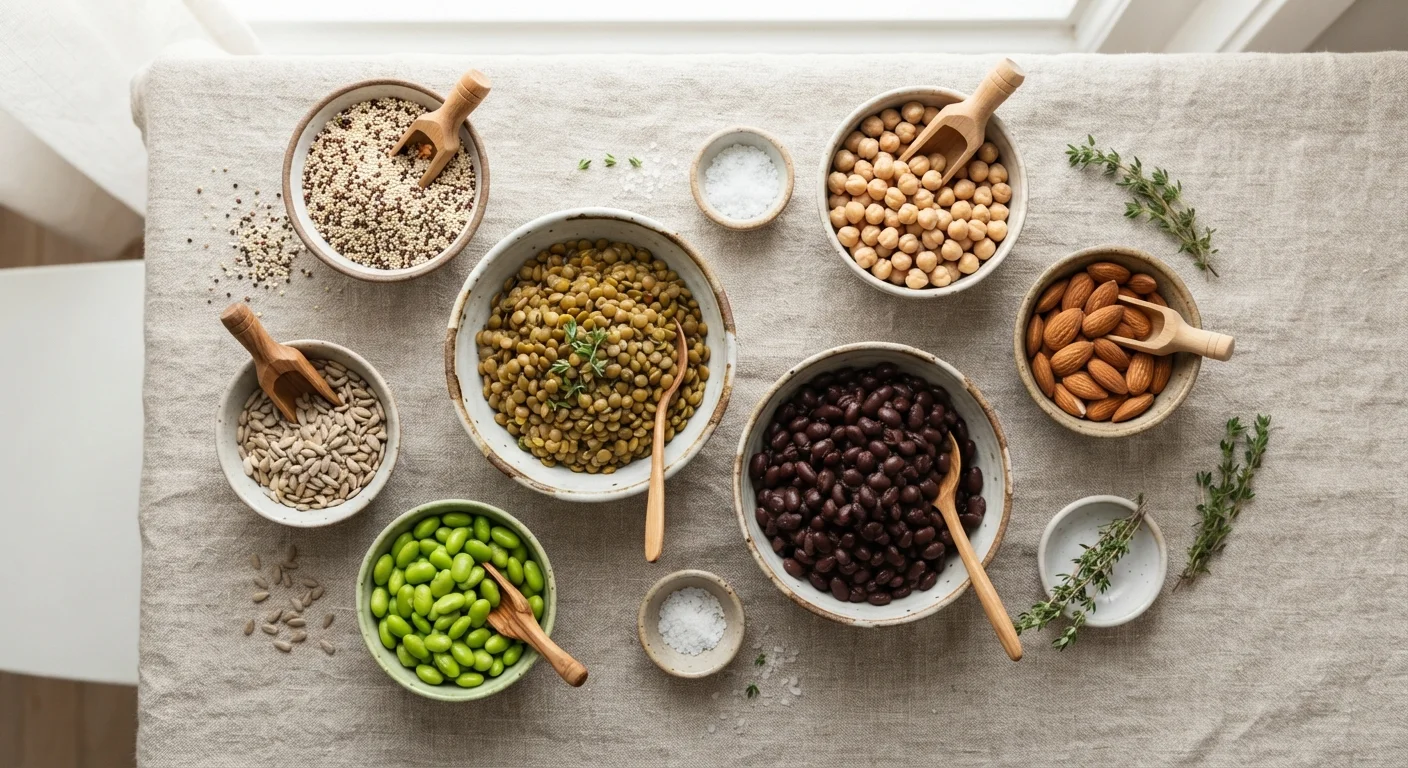
Lentils, chickpeas, black beans, soybeans, and peas are among the most protein-dense plant foods. Soybeans are a notable standout - they contain all nine essential amino acids in meaningful amounts and are considered a complete protein. Lentils provide roughly 18 grams of protein per cooked cup, along with substantial fiber and iron. Most other legumes fall in the 14-17 gram range per cup cooked.
Whole Grains
Quinoa is frequently highlighted because, like soy, it is a complete protein. It provides approximately 8 grams per cooked cup. Other grains - oats, farro, amaranth, and brown rice - contribute meaningful protein (4-10 grams per serving) but are generally lower in the amino acid lysine. Pairing them with lysine-rich legumes addresses this gap effectively.
Nuts and Seeds
Hemp seeds are a complete protein source, offering around 10 grams per three tablespoons. Pumpkin seeds, sunflower seeds, almonds, and peanuts range from 5-9 grams per ounce-equivalent serving. Nuts also contribute healthy unsaturated fats, but caloric density should be kept in mind when using them as a primary protein vehicle.
| Soy protein status | Complete protein (all 9 essential amino acids) (U.S. Department of Agriculture, FoodData Central) |
| Lentils - protein per cooked cup | ~18 g (U.S. Department of Agriculture, FoodData Central) |
| Quinoa - protein per cooked cup | ~8 g (U.S. Department of Agriculture, FoodData Central) |
| Hemp seeds - protein per 3 tbsp | ~10 g (U.S. Department of Agriculture, FoodData Central) |
| Amino acid limiting factor in grains | Lysine (typically low) (General nutrition science consensus) |
| Amino acid limiting factor in legumes | Methionine (typically lower) (General nutrition science consensus) |
Combining Proteins and Practical Eating Patterns
Earlier nutrition guidance emphasized combining complementary proteins within a single meal. Current dietary science suggests that as long as varied protein sources are consumed throughout the day, the body manages amino acid needs effectively. That said, some classic combinations - rice and beans, hummus and whole-grain pita, oatmeal with hemp seeds - are convenient and nutritious regardless.
Bioavailability is another factor worth noting. Plant proteins are generally absorbed less efficiently than animal proteins due to fiber, phytates, and other compounds. Soaking, sprouting, or fermenting legumes and grains can improve mineral and protein absorption meaningfully.
When planning meals, our nutrition-focused grocery guide offers practical strategies for building a cart that supports these goals without overcomplicating the process.
For context on how some plant foods are mischaracterized nutritionally - soy being one common example - see our look at commonly misunderstood foods.
This article provides general nutrition information for educational purposes only and is not a substitute for personalized advice from a registered dietitian or qualified healthcare professional.