

Key Takeaways
- Brake pads are consumable friction components that typically need replacement more often than brake discs.
- Brake discs (rotors) are the metal surfaces pads press against; they wear more slowly but can warp or score.
- Squealing often signals worn pads; pulsing or vibration through the pedal more often points to disc problems.
- Ignoring either component long enough can damage the other, turning a simple repair into a more expensive one.
- A qualified mechanic should inspect and replace brake components when safe driving ability is in question.
Option A
Brake Pads
The consumable friction material that does the stopping work.
Best for: Drivers who want to catch the most frequent and straightforward brake maintenance task before it causes costlier damage.
Option B
Brake Discs (Rotors)
The durable metal surface that pads clamp against to slow the vehicle.
Best for: Drivers diagnosing vibration, pulsing, or noise that persists even after new pads are installed.
If your brakes squeal or squeak at the end of every stop
Brake Pads
Most brake pads include a wear indicator - a small metal tab - that produces squealing when the friction material runs low. This is the classic sign that pads need replacement.
If you feel a pulsing or vibration through the brake pedal
Brake Discs (Rotors)
Pedal pulsation typically means a disc has warped from heat cycling or uneven wear. New pads alone will not eliminate this symptom - the discs need inspection and likely resurfacing or replacement.
If brakes are grinding metal-on-metal
Brake Pads
Grinding usually means pads are fully depleted and metal is contacting the disc directly. Act promptly - continued driving in this state can damage the disc as well, compounding the repair cost.
If your vehicle pulls to one side under braking
Brake Discs (Rotors)
Uneven braking force - often caused by a scored or unevenly worn disc on one side - can cause pulling. A professional inspection of both pads and discs is warranted in this case.
How Each Component Works
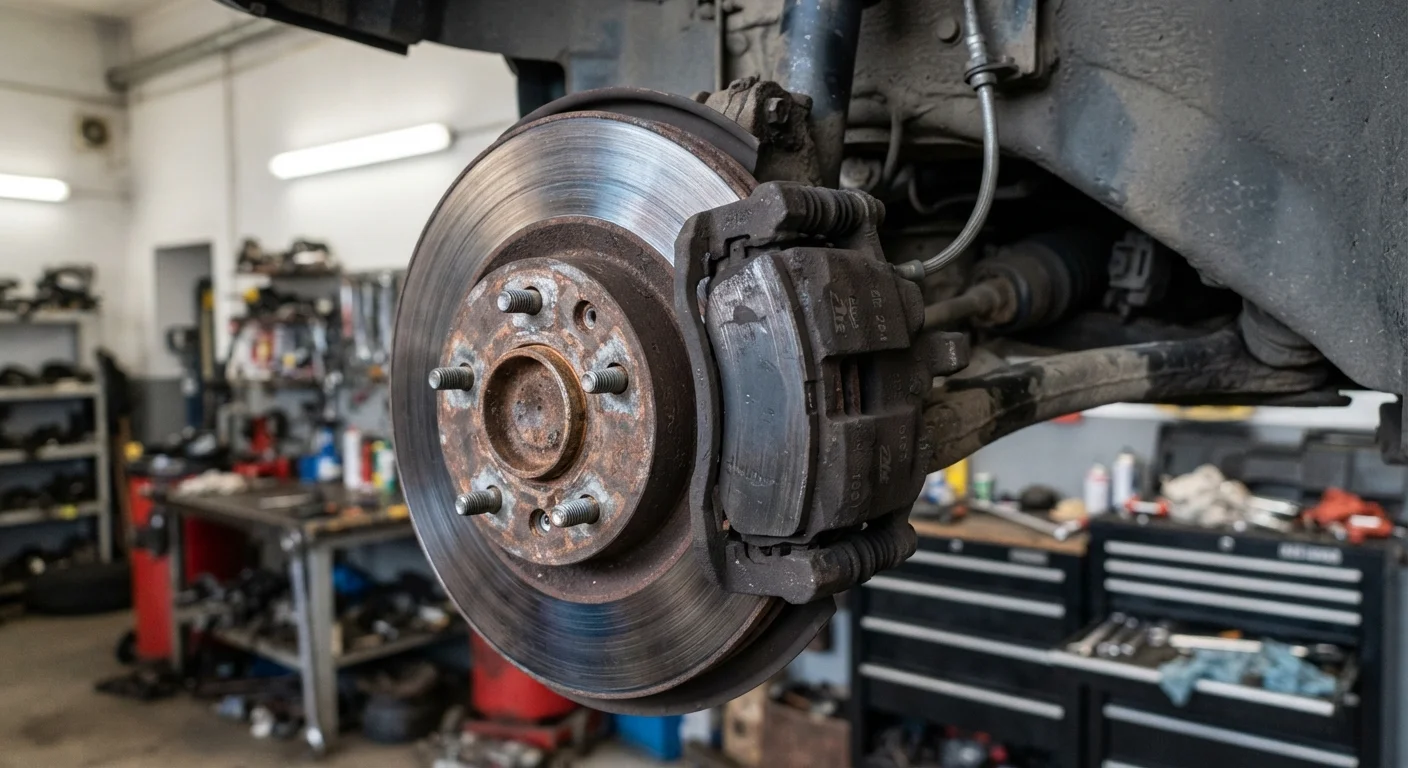
Your vehicle's disc brake system relies on two main parts working in tandem: the brake pad and the brake disc (also called a rotor). When you press the brake pedal, hydraulic pressure pushes a caliper - a clamp-like device - to squeeze the brake pads against each side of the spinning disc. The resulting friction converts the vehicle's kinetic energy (motion) into heat, slowing the wheel.
Brake pads are made from friction material - typically a composite of metal fibres, resins, and fillers bonded to a steel backing plate. Because they are designed to be the sacrificial component, they wear down with every stop. Brake discs are cast-iron or composite metal discs that spin with the wheel. They are built for durability, but they do gradually thin from repeated contact and can warp when exposed to extreme heat cycles.
Understanding these roles helps clarify why the two parts fail in different ways and at different rates.
| Criterion | Brake Pads | Brake Discs (Rotors) |
|---|---|---|
| Primary function | Create friction to slow the wheel | Provide the surface pads clamp against |
| Material | Friction composite on steel backing | Cast iron or composite metal |
| Wear rate | Higher - replaced more frequently | Lower - outlasts several pad sets |
| Key failure symptom | Squealing, grinding noise | Pedal pulsation, vibration, scoring |
| Inspected by | Visual check of thickness | Micrometer measurement of disc thickness |
| Risk if ignored | Damages disc surface (costlier repair) | Reduced braking control, pad damage |
Warning Signs: Pads vs. Discs
Both components communicate wear through specific symptoms. Knowing which symptom points to which part helps you have a more informed conversation with a mechanic - and helps you avoid paying for work that isn't needed.
Signs brake pads need attention
- Squealing or squeaking: Most pads have a built-in wear indicator - a metal tab - that contacts the disc and squeals when friction material is nearly gone.
- Grinding: A harsh grinding noise typically means the pad's friction material is completely depleted and metal is running directly on the disc. This is urgent.
- Longer stopping distances: Reduced friction material means less stopping power, especially noticeable in emergency situations.
Signs brake discs need attention
- Pedal pulsation: A rhythmic pulsing through the brake pedal under braking often indicates a warped disc.
- Vibration in the steering wheel: Similar to pedal pulsation, this can point to a front rotor that has developed uneven thickness.
- Visible grooves or scoring: Deep grooves worn into the disc surface - sometimes visible through the wheel spokes - indicate the disc surface has been damaged, often by worn-out pads left too long.
- Rust and surface corrosion: Light surface rust on discs is normal after the vehicle sits; it typically clears after a few stops. Thick, pitted rust that does not clear may signal a disc that needs replacement.
Both Components Are Inspected Together
When a mechanic inspects your brakes, they evaluate pads and discs as a system, not in isolation. Replacing pads on a severely scored or out-of-spec disc is generally ineffective - the new pads wear unevenly against a damaged surface. Most professional brake services include a disc thickness and surface check alongside pad inspection, so the technician can advise on whether only pads, only discs, or both need attention.
Replacement Intervals and What Affects Them
There is no universal mileage figure that applies to every driver, because brake wear depends heavily on driving style, load, terrain, and the quality of the components installed. That said, general guidance is useful as a starting point.
25,000-65,000 mi
Typical brake pad replacement range
Industry guidance commonly places brake pad life between 25,000 and 65,000 miles, with driving style and pad compound being the primary variables.
50,000-70,000 mi
Typical brake disc service life
Many mechanics suggest brake discs can last 50,000 to 70,000 miles under normal conditions, though this varies by vehicle type, disc quality, and driving environment.
Brake pads are generally considered a higher-frequency replacement item. Discs, by contrast, are designed to outlast several sets of pads - but they have a minimum thickness specification (often stamped on the disc edge) below which they must not be used. A mechanic will measure disc thickness with a micrometer during routine inspections.
Driving habits that accelerate wear on both components include frequent highway driving with sudden stops, heavy towing or hauling, and stop-and-go urban commuting. Smooth, anticipatory braking - easing into stops rather than applying sudden hard pressure - is consistently recognised as one of the most effective habits for extending brake life on both pads and discs.
If you have any doubt about the condition of your brakes, have the vehicle inspected by a qualified mechanic before continuing to drive. Brake system integrity is fundamental to safe vehicle operation.